Welcome to Albert's Sermon Illustrations

In this blog, I have collected many stories, quotes, jokes and ideas that I use regularly in my sermons.I have tried to put in the sources and origins of these illustrations. If I have missed some or gotten the wrong sources, please let me know. I will update them. Feel free to use these illustrations for the glory of God. If you have some illustrations that you like to contribute, kindly add them to my blog, so that I and others may benefit from them. God bless!
Reverend Albert Kang

P/S: This is a free site and thus it has advertisements that are not in the blogger's control. If some of them are offensive, please ignore them. Thank you for your understanding.
Showing posts with label Missionary. Show all posts

Sunday, October 4, 2015

God of Ample Means


Missionary statesman, Hudson Taylor, had complete trust in God's faithfulness. 

In his journal he wrote: "Our heavenly Father is a very experienced One. He knows very well that His children wake up with a good appetite every morning...He sustained 3 million Israelites in the wilderness for 40 years. 

We do not expect He will send 3 million missionaries to China; but if He did, He would have ample means to sustain them all.

Depend on it, God's work done in God's way will never lack God's supply.

Our Daily Bread, May 16, 1992.

Wednesday, March 26, 2014

God's Guardian Angels


"Are not all angels ministering spirits sent to serve those who will inherit salvation?" Hebrews 1:14

As told by Pastor Glenn Gunderson of First Baptist Church of Pomona, California: A missionary who was serving in a remote area of Africa made a monthly journey to a city two days bike ride away to pick up supplies and medicine.

On one of his many journeys he came across two men who were fighting, one of whom was severely injured. The missionary stopped to help the injured man. After treating him, he continued on his way.

Sometime later in the village a man came to him and said, "You probably don't remember me but I was one of the men who was fighting when you stopped to help."

The missionary said he remembered the incident and the man told him. "We were going to rob you on one of your trips. We knew you always carried cash and medicine and were unarmed. When we came to rob you, I had three friends with me. We saw where you camped and put your bike down, but you had 26 armed guard all around you so we weren't able to rob you."

The missionary said, "That's impossible. I always travel alone and have no armed guards of any kind." The man said, "Oh yes, my friends and I each counted 26 men, heavily armed standing around you while you slept."

When the missionary visited his home church back in Michigan, he related this story to the church family. A man in the congregation stood up and asked, "What time and what day did this happen?" The missionary told him the date and that it was a Saturday night.

The man said, "It was night there but it was Saturday morning here. I was loading my golf clubs in my car. I was on my way to the golf course and the Holy Spirit impressed on me so heavily that I needed to pray for you that I took my clubs out of my car and called men from church and we came together and earnestly prayed for you. He then said, "I would like to ask each one of these men who prayed with me that Saturday morning to stand up. As they stood, each one in the church counted 26 men standing!

Dick Innes

Sunday, August 18, 2013

A Pair of Glasses Heading for China


My mother's father worked as a carpenter. On this particular day, he was building some crates for the clothes his church was sending to orphanages in China. On his way home, he reached into his shirt pocket to find his glasses, but they were gone. When he mentally replayed his earlier actions, he realized what had happened; the glasses had slipped out of his pocket unnoticed and fallen into one of the crates, which he had nailed shut. His brand new glasses were heading for China! 

The Great Depression was at its height and Grandpa had six children. He had spent $20 for those glasses that very morning. He was really upset by the thought of having to buy another pair. "It's not fair," he told God as he drove home in frustration. "I've been very faithful in giving of my time and money to your work, and now this." 

Months later, the director of the orphanage was on furlough in the United States. He wanted to visit all the churches that supported him in China, so he came to speak oneSunday at my grandfather's small church in Chicago. 

The missionary began by thanking the people for their faithfulness in supporting the orphanage. "But most of all," he said, "I must thank you for the glasses you sent last year. You see, the Communists had just swept through the orphanage, destroying everything, including my glasses. I was desperate. Even if I had the money, there was simply no way of replacing those glasses. Along with not being able to see well, I experienced headaches every day, so my coworkers and I were much in prayer about this. Then your crates arrived. When my staff removed the covers, they found a pair of glasses wedged between two blankets. 

The missionary paused long enough to let his words sink in. Then, still gripped with the wonder of it all, he continued: "Folks, when I tried on the glasses, it was as though they had been custom made just for me! I want to thank you for being a part of that." 

The people listened, happy for the miraculous glasses. But the missionary surely must have confused their church with another, they thought. There were no glasses on their list of items to be sent overseas. But sitting quietly in the back, with tears streaming down his face, an ordinary carpenter realized the Master Carpenter had used him in an extraordinary way. 

There are times we want to blame God instead of thanking him! Perhaps it is something we ought to try more often, "Thank you, God, for not allowing my car to start this morning." He may have been saving your life from a car accident. "Lord Jesus, thank you for letting me lose my glasses; I'm sure they'll be put to good use or there is a lesson to be learned." 

I have to remember this in these times of trial with my own family. 

May GOD bless your week. Look for the perfect mistakes!

Monday, December 17, 2012

Missionary and Toast


A missionary in the deepest Amazon suddenly finds himself surrounded by a bloodthirsty group of natives. Upon surveying his situation, he says quietly to himself, "I'm toast."

A ray of light breaks forth from the sky and a voice booms out: "No, you are NOT toast. Pick up that stone in front of you and bash the head of the chief."

So the missionary picks up the stone and proceeds to bash the head of the chief, knocking him out. He is breathing heavily while standing above the sprawled out-chief.

Surrounding him are the 100 native warriors with a look of shock on their faces.

The voice booms out again: "Okay...NOW you're toast!"

Monday, March 26, 2012

Henry Nott's First Convert in 22 Years

In 1797, Henry Nott was the first missionary to Tahiti. During his first five years on the mission field, three missionaries were killed and four others deserted the field. Henry built a friendship with the island’s chief Pomare, and soon new missionaries arrived to help support Henry.

Then in 1803, Pomare he died and his son assumed the title Pomare II. He was even more vicious and violent than his father. After eight years of fruitless labor and the missionary house being ransacked, six more missionaries abandoned Tahiti, again leaving Nott alone to minister. He repeatedly went on long, arduous preaching tours throughout the island. He spent months and years over his lexicons, in the study of Hebrew and Greek, and in the translation of the New and Old Testaments into the language of Tahiti.

Henry did not see his first convert until he had been in Tahiti 22 years. It took several decades, but he was successful in translating the Bible into the Tahitian language.

Henry returned to England only two times during 47 years on the field. His perseverance at preaching the Word finally took hold in Tahiti.  

The Lord asks us to be faithful both in season and out of season. In His time, He will bless. Today in prayer, praise Jesus for His great patience and seek to be patient in all that you do.

"Obedience is the fruit of faith; patience the bloom on the fruit."  - Christina Rossetti

By Peter Kennedy

Thursday, March 15, 2012

A Missionary At 70

“I thank Christ Jesus our Lord, who has given me strength, that he considered me faithful, appointing me to his service.” – 1 Timothy 1:12

Gef Smock - Missionary at 70
In 2001, on his 33rd wedding anniversary, Don Smock, a U.S. diplomat passed away. His widow, Gef, was a bit lost as to what to do after Don’s death. 

"Someone told me to go to a missions conference, that it would make me feel better," she said. "I listened to the missionaries tell stories, and I knew I needed to go. So when they gave the invitation, I walked down."

She continued: “I knew this was exactly what I was supposed to be doing. All those years of traveling with my husband had prepared me for this, for what God was going to do with me at this age. I was going to go wherever the Lord led." 

So at age 70, Gef began a three-year tour serving as a high school English teacher for missionary kids in Thailand.

Then she got a surprise when the Lord led her to become a missionary in Macedonia for six years. Both of Gef’s parents had emigrated from Macedonia and she was fluent in the language.  

She said was "the obvious work of God's hand," she ended up in Macedonia. She retired from missionary service at age 79, knowing that the Lord gives strength to all who faithfully serve Him.

Jesus loves you and has a plan for your life. It is a plan to bring your Heavenly Father glory. Today in prayer, praise the Lord that He will give you strength if you faithfully serve Him.

"The measure of a man is not how many servants he has, but how many men he serves." - D.L. Moody

God’s Word: “I have become its servant by the commission God gave me to present to you the word of God in its fullness” – Colossians 1:25

By Peter Kennedy

Monday, December 5, 2011

Would God Send A Water Bottle and A Doll?

Helen Roseveare with an African orphan
Dr. Helen Roseveare, a missionary to Africa, told about a mother who died at the mission station after giving birth to a premature baby. An incubator was set up to keep the infant alive, but the only available hot water bottle was beyond repair. 

During devotions that morning the children were asked to pray for the baby and for her young sister, who were now orphans. One of the girls responded, "Dear God, please send a hot water bottle today. Tomorrow will be too late because by then the baby will be dead. And dear Lord, send a doll for the sister so she won't feel so lonely." 

That afternoon a large parcel arrived from England. Eagerly the children watched as it was opened. Much to their delight, under some clothing was a hot water bottle! Immediately the girl who had prayed so earnestly started to delve deeper, exclaiming, "If God sent that, I'm sure He also sent a doll." And she was right! Five months earlier, God had led a group of women in England to include both of those items in response to a prayer that had not yet been uttered.

That's the promise God gives us through Isaiah. As the One who knows what lies ahead, the Lord works even in the past to bring about blessings for His children's future. 

As you consider your situation today, it may seem that the Lord is asking you to do the illogical. You may think, Why should God prompt me to do this? I see no need. But remember, what you do today could be the answer to someone's prayers tomorrow. 

Trust God, and let the One who holds past, present and future be your Guide for the present. With God, the past and future are simply part of the eternal present. Isaiah 65:24: It shall come to pass that before they call, I will answer; and while they are still speaking, I will hear.

Thursday, July 28, 2011

The Old Woman And The Baby

Patricia Saint John wrote about Mary, an English nurse who at the time was working in a mission clinic in an Arab country. "One morning she and her assistant, Fatima, needed to travel eight miles to another village. They caught a bus that was going in their direction. But after a few miles, the bus driver passed their stop and kept on driving. The bus driver ignored the women's pleas to return to the road that led to their village. Mary became upset, but Fatima remained calm, recalling their morning prayers asking for God's guidance.

"Finally, the bus stopped at the foot of a hill, many miles from Mary's and Fatima's homes. At this stop, there was an old woman with a baby in her arms. She walked up to Mary and presented the baby to her. The poor child had a severe eye infection and needed immediate medical attention to save her eyes.

"Mary asked the old woman how she knew to find help here so far from the main village. The old woman replied that a man had come to her in a dream and told her that the English nurse would be waiting at the end of this road the next day. Mary and Fatima had made no plans to come anywhere near this village. They couldn't have anticipated that a rude bus driver would leave them many miles from their designated stop. Yet God had told this desperate woman where to find them. Mary treated the baby's eyes; within days the infection was gone. Later, Mary and Fatima had the opportunity to give their Christian testimony to many people in that village because of their meeting with the old woman and the baby."

Patricia Saint John in Finding God Between a Rock and a Hard Place, compiled by Lil Copan and Elisa Fryling (Wheaton, IL.: Harold Shaw Publishers, 1999), pp. 106-110. Cited on www.sermons.com

Saturday, March 12, 2011

Amy Carmichael's First Act of Kidnapping

Amy Carmichael was a kidnapper. Many times over, in fact! On this day, March 6, 1901, she sheltered her first temple runaway, a young girl dedicated to the Hindu gods and forced into prostitution to earn money for the priests. Technically that made her a kidnapper. Over the years, Amy rescued many other children, often at the cost of extreme exhaustion and personal danger. When she rescued five-year-old Kohila, the child's guardians wanted her back. Amy refused to return the little girl to certain abuse. Instead, she arranged for her to "disappear" to a safe place. The plot was discovered. Prosecutors brought charges against Amy. She faced a seven year prison term.

Irish-born Amy was a most unlikely heroine. She suffered neuralgia, a disease of the nerves that made her whole body weak and achy and put her in bed for weeks at a time. Friends thought she was foolish when she announced she was going to be a missionary. They predicted that she would soon be back in England for keeps. But Amy was sure that God was calling her to go overseas. All of her life, she had been learning to listen to his voice.

One of the first incidents occurred when she was a child. Mother had said that if Amy prayed, the Lord would answer. Amy had brown eyes. She prayed for blue. In the morning she jumped out of bed and ran to the mirror. Mrs. Carmichael heard her wail in disappointment. It took Mrs. Carmichael several minutes of careful explanation before Amy understood that "no" was an answer too. God meant Amy to have brown eyes for a reason, explained Mrs. Carmichael. Amy wasn't so sure. Smiling Irish blue would always be her favorite color, even if God said "No."

Amy with rescued children
As a youth Amy thought she was a Christian, but an evangelist showed her that she needed a personal commitment to Christ. She made it. Service to Him became the center and passion of her life. The year that Mr. Carmichael died unexpectedly, Amy started classes and prayer groups for Belfast ragamuffins. She also began a Sunday work with the "shawlies." These were factory girls so poor that they could not afford hats to wear to church and wore shawls instead. Respectable people didn't want anything to do with them. Amy saw that they needed Christ just the same as their supposed "betters." So many shawlies attended Amy's classes that she had to find a building large enough to hold three hundred and more.

The Carmichaels lost all their money through financial reverses and a change became necessary. Mrs. Carmichael decided to move to England and work for Uncle Jacob. Amy and another sister joined her. Uncle Jacob asked Amy to teach his mill workers about Jesus. Amy threw herself into the work, living near the mill in an apartment infested with cockroaches and bed bugs. However, she was constantly sick with neuralgia and had to lie in bed for days at a time. It was clear she must give up the work. Faith and circumstances eventually led Amy to India where she began her rescue work with temple children. Dressed in a sari, her skin stained brown, she could pass as a Hindu. Now she understood why God had given her brown eyes. Blue eyes would have been a dead giveaway!

Amy did not go to prison. A telegram arrived on February 7, 1914, saying, "Criminal case dismissed." No explanation was ever forthcoming, but those who worship Amy's Lord have no doubt that He had a hand in the decision.

Bibliography:
  1. "Carmichael, Amy." Biographical Dictionary of Evangelicals. Timothy Larsen, editor. Downers-Grove, Illinois: Intevarsity Press, 2003.
  2. Davis, Rebecca Henry: With Daring Faith. Greenville, South Carolina: Bob Jones University, 1987.
  3. Houghton. Amy Carmichael. London: Hodder and Stoughton.
Source:
http://www.christianity.com/ChurchHistory/11630667/  

Sunday, January 9, 2011

Power To Pump Well Water

C.T. Studd shortly after his arrival in the African bush (1910)
I don’t know if you’ve heard the story of C. T. Studd the great Christian missionary. He went to a fair years and years ago and was captivated by a man pumping a well. 

The thing that grabbed him was how fast he was pumping and how long he was able to pump. He said to himself, "No man can do that. What kind of vitamins does he take? What kind of exercise program is he on?" He walked over to get a closer look. He found that the man dressed in Oriental garb was not a man. He was a stick figure. His elbows were hinges. He was not pumping the well, the well was pumping him. It was an artesian well. You see, there was a power that turned the man.

I believe that’s exactly what Paul is saying. He says, "I want you to know something. I want you to know it’s not you doing it for God. It’s God doing it in and through you as you bow before Him." Listen, it’s a 200% relationship. It’s 100% my willingness to obey, yield and bow, but it’s also 100% His power, His presence and what He can do in and through me that I cannot do and certainly will never deserve.

Sunday, November 28, 2010

Wait And See

A missionary reports that one native resisted baptism, stating, "I will wait and see just what this means in their lives." 

After many watchful weeks, the native said, "I too want to be baptized; I have watched those persons who were baptized, and it has made a difference.  I want Jesus to do for me what he has done for them."

Thursday, November 25, 2010

The Cambridge Seven

The Cambridge Seven
C.T. Studd, M. Beauchamp, S.P. Smith,
A.T. Polhill-Turner, D.E. Hoste, C.H. Polhill-Turner, W.W. Cassels
I have been preaching a sermon that uses the Cambridge Seven as models of faith. These men had served their generation and now it is our turn to serve ours. The bible is clear that God watches over lives that serve their generations. King David is a very good example:
For when David had served God's purpose in his own generation, he fell asleep; he was buried with his fathers and his body decayed. (Acts 13:36)
David served his generation and he was known as a man after God's own heart (Acts 13:22). In the same verse, the bible says that 'he will do everything I want him to do'. Even David made a lot of mistakes, he was still an obedient servant of God.

Looking at the 1800s, little known stories of heroes of faith were being created by committed servants of God. In 1881, Harold Schofield who was a young missionary doctor, serving in the northern province of Shansi, China, was suffering from typhus. He was bed-ridden but that did not stop him from praying. He asked God for a replacement, knowing full well that he may not recover. He prayed that God will send graduates from England's top colleges to evangelize China. On August 1, 1883, Harold Schofield went home to be with the Lord. This dear brother was only 31 years old.

Did God answer his prayer? Yes, In February, 1885, Schofield's prayer was answered as seven Cambridge students volunteered to leave behind cosy lives of wealth and privilege to serve God in whatever way they were led. These men became known as THE CAMBRIDGE SEVEN. They were namely:
  1. Charles Thomas Studd
  2. Montagu Harry Proctor Beauchamp
  3. Stanley P. Smith
  4. Arthur T. Polhill-Turner
  5. Dixon Edward Hoste
  6. Cecil H. Polhill-Turner
  7. William Wharton Cassels
At the commissioning service of the Cambridge Seven, they said, "Pray that God may keep us faithful".

These seven inspired thousands of others to think seriously of missionary service. Included among the Cambridge Seven was C.T. Studd, captain of England and the finest cricketer of his day - if he could give all that up, then so could anyone! Many were inspired to serve God. In 1885, there were only 163 missionaries serving in China Inland Mission. By 1890, that number had doubled and by 1900, there were 800 active missionaries serving God in China through China Inland Mission. That represented one-third of the entire Protestant missionary force of those days.

Here are some details of what happened to the Cambridge Seven:


William Wharton Cassels (1858 - 1925)
William worked in China for 10 years and then returned to England in 1895 where he was consecrated as the new Bishop of a new diocese in Western China. He then returned to Western China — he ministered here until his death in 1925.

Stanley Peregrine Smith (1861 - 1931)
Stanley was sent to North China. Here he learned the Chinese language and soon became as fluent a preacher in Chinese as he was in English. He died in China on January 31, 1931.

Charles Thomas Studd (1860 - 1931)
A famous England cricketer - he was sent home because of ill health in 1894. Later he worked in India and Africa and was the founder of WEC. He died in 1931in Ibambi, Belgian Congo.

C. T. Studd was the one who penned this famous quote: "Some want to live within the sound of church or chapel bell; I want to run a rescue shop within a yard of hell". When he was old, some of his critics asked him to go home and retire. Studd refused, He said, "God has called me to go, and I will go. I will blaze the trail though my grave may only become a stepping stone that younger men may follow".

Cecil Polhill-Turner (1860 - 1938)
Cecil served God in North West China and also Tibet. He and his wife were nearly killed in 1892 in a riot. In 1900, his health failed and was sent home to England. He made seven prolonged missionary visits. In 1908 in Sunderland he became the leader of the Pentecostal Missionary Union and was greatly used in the formation of the Pentecostal Movement in Britain.

Arthur Polhill-Turner (1862 - 1935)
Arthur was ordained as a minister in 1888. He moved to the densely populated areas to reach as many people as he could. He remained in China throughout the uprisings against foreigners and did not leave there until 1928, when he retired and returned to England. He died in 1935.

Sir Montagu Harry Proctor Beauchamp (1860 - 1939)
In 1900 Montagu was evacuated from China because of the uprisings but returned again to China in 1902. He then returned again to England in 1911 and served as a chaplain with the British Army. His son became a second-generation missionary in China and in 1935 he went back to China; he died at his son's mission station in 1939

Dixon Hoste (1861 - 1946)
Dixon succeeded Hudson Taylor as the Director of the China Inland Mission and for thirty years, he led the Mission. He retired in 1935 but remained in China until 1945, when he was interned by the Japanese. He died in London, in May 1946 and was the last remaining member of the "The Cambridge Seven" to die.

Dixon said, "The man who does not learn to wait upon the Lord and have his thoughts molded by Him will never possess that steady purpose and calm trust, which is essential to the exercise of wise influence upon others, in times of crisis and difficulty."

These faithful men had served God for their generation. Their testimonies proved that when lives are fully committed to the Lord, they will create great impact upon their generation for the kingdom of God. May God raise up more faithful men and women to serve our generation.


By Rev Albert Kang

For further reading, please check out these publications: The Cambridge Seven by J.C. Pollock; A Cambridge Movement by J.C. Pollock; C.T. Studd: Cricketer and Pioneer by Norman Grubb; Student Volunteer Movement (notes) by Charles Mott.

Sunday, November 14, 2010

The Evil Of Slavery

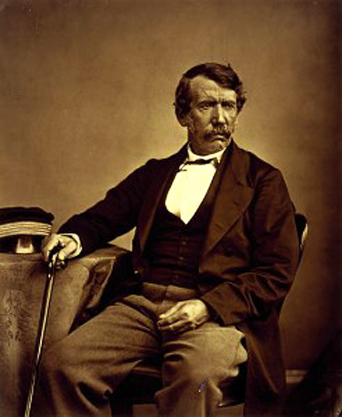
Dr. David Livingstone, the Scottish missionary explorer, awakened the world to the horror of the Arab slave trade, which he called a "monster of iniquity brooding over Africa." By publicizing the evil of slavery, Livingstone worked effectively to see it abolished. 

For every 20,000 slaves captured and exported, he estimated 100,000 Africans were killed, wounded, or died of disease on the slave trails. He wrote: "The many skeletons we have seen along the paths of the wilderness attest the awful sacrifice of human life that must be attributed to this trade in hell."

Today, there are millions who are enslaved by sins. The Lord Jesus has awakened us all to that fact. He wants us to be His witnesses to share the Good News of salvation and liberation from sins through His completed work on the Cross. 

Adapted from 'Dr. Livingstone, I Presume?' Church History
Source:http://www.christianity.com/ChurchHistory/11630560/

Monday, November 8, 2010

The Lion and Faith

It is a Masai elder who tells the story. It comes from the book, CHRISTIANITY REDISCOVERED, in which the Roman Catholic missionary, Vincent Donovan, shares his discoveries as he worked among Masai people in Tanzania, just south of Kenya. 

Donovan had been working among the various communities of the Masai for many months. It was difficult work, and at times, his faith faltered. At one point, Donovan spoke with a Masai elder about the agony of belief and unbelief. In their conversation, the Masai elder pointed out that the word Donovan had been using in Swahili to convey the word "faith" was not a very good word in their language. 

The word they were using for "faith" meant literally, "to agree to." Donovan acknowledged that he knew the word was not a good one to translate the word "faith." The Masai elder said that to believe like that was similar to a white hunter shooting an animal from a great distance. Only his eyes and his finger got into it. 

The Masai elder then said that for one to really believe is more like a lion going after its prey. The lion's nose and ears sense the prey. He sniffs the air and locates it. Then he crouches, and slithers along the ground virtually invisible. We have never seen lions do this, but we have seen our cats. Same lineage, apparently. 

A cat thinks it becomes invisible as it stalks the prey. The lion gets into position, and when everything is optimum, the lion pounces. All the power of his body is involved and as the animal goes down, the lion envelopes it in his arms, pulls it to himself, and makes it a part of himself. This, said the elder, is the way one believes, making faith a part of oneself! 

Donovan nodded in complete agreement, almost overcome with the elder's wisdom. But the elder was not done yet. The old Masai became thoughtful. Then he said to Donovan: "We did not search you out, Padri. We did not even want you to come to us. You searched us out. You told us of the High God. You told us we must search for the High God. But we have not done this. Instead, the High God has searched us out and found us! All the time we think we are the lion. In the end, the lion is God!

From a sermon by Norm Lawson, Central Protestant Church, Richland, Washington

Sunday, October 24, 2010

The Story of Adoniram Judson


Adoniram Judson
This is the story of Adoniram Judson. It is a kingdom story that we should tell and retell and share with each other. I have posted it here for you and I hope you will share it with others.
 
The son of a pastor, he was a brilliant boy. His mother taught him to read in one week when he was three to surprise his father when he came home from a trip. When he was sixteen he entered Rhode Island College (later Brown University) as a sophomore and graduated at the top of his class three years later in 1807. 

The Detour from God
What his godly parents did not know was that Adoniram was being lured away from the faith by a fellow student named Jacob Eames who was a Deist. By the time Judson’s college career was finished, he had no Christian faith. He kept this concealed from his parents until his twentieth birthday, August 9, 1808, when he broke their hearts with his announcement that he had no faith and that he wanted to write for the theater and intended to go to New York, which he did six days later on a horse his father gave him as part of his inheritance.

It did not prove to be the life of his dreams. He attached himself to some strolling players and, as he said later, lived “a reckless, vagabond life, finding lodgings where he could, and bilking the landlord where he found opportunity.” The disgust with what he found there was the beginning of several remarkable providences. God was closing in on Adoniram Judson.
He went to visit his Uncle Ephraim in Sheffield but found there instead “a pious young man” who amazed him by being firm in his Christian convictions without being “austere and dictatorial.” Strange that he should find this young man there instead of the uncle he sought.

The Unforgettable Night
The next night he stayed in a small village inn where he had never been before. The innkeeper apologized that his sleep might be interrupted because there was a man critically ill in the next room. Through the night Judson heard comings and goings and low voices and groans and gasps. It bothered him to think that the man next to him may not be prepared to die. He wondered about himself and had terrible thoughts of his own dying. He felt foolish because good Deists weren’t supposed to have these struggles.

When he was leaving in the morning he asked if the man next door was better. “He is dead,” said the innkeeper. Judson was struck with the finality of it all. On his way out he asked, “Do you know who he was?” “Oh yes. Young man from the college in Providence. Name was Eames, Jacob Eames.”

Judson could hardly move. He stayed there for hours pondering death and eternity. If his friend Eames were right, then this was a meaningless event. But Judson could not believe it: “That hell should open in that country inn and snatch Jacob Eames, his dearest friend and guide, from the next bed—this could not, simply could not, be pure coincidence.” God was real. And he was pursuing Adoniram Judson. God knew the man he wanted to reach the Burmese people.

Alive to Christ and Dead to America
Judson’s conversion was not immediate. But now it was sure. God was on his trail, like the apostle Paul on the Damascus road, and there was no escape. There were months of struggle. He entered Andover Seminary in October 1808 and in December made solemn dedication of himself to God. On June 28, 1809, Judson presented himself to the Congregationalists for missionary service in the East.

An Incredible Ministry
On February 17, 1812, after only twelve days of marriage, Judson and his wife Ann set out from Massachusetts. Their missionary journeys, taking them first to India and later to Burma (present-day Myanmar), would prove to be wrought with suffering and tragedy.

They underwent economic challenges, losing the financial backing of their supporters only a few months after leaving the United States. Their plans unexpectedly changed when problems with their visas in India forced them to reluctantly settle in Burma. They faced a severe language barrier that required them to learn the Burmese tongue in a country where no English was spoken. 

Once they could communicate, their message still met with great resistance from the Burmese citizens. In fact, the Judson’s did not see anyone come to Christ for the first six years of their work.

And there were no converts. It was to be six, long, soul-crushing, heart-breaking years before the date of the first decision for Christ. Then, on June 27, 1819, Judson baptized the first Burmese believer, Moung Nau. Judson jotted in his journal: “Oh, may it prove to be the beginning of a series of baptisms in the Burmese empire which shall continue in uninterrupted success to the end of the age.” Converts were added slowly — a second, then three, then six, and on to eighteen.

Nancy visited Adoniram in prison with little Maria
But opposition came, also. Finally Judson was imprisoned as a British spy — an imprisonment of twenty-one months. Judson was condemned to die, but in answer to prayers to God and the incessant pleadings of his wife to officials (one of the most emotional-packed, soul-stirring stories in evangelism), Judson’s life was spared and finally British intervention freed him from imprisonment.

The few who remained faithful were rewarded with intense government persecution. Judson, himself, was also in danger. Suspected of being a spy during Burma’s civil war, he was sent to a death prison where he was hung upside down in leg irons every night and forced on a death march that almost killed him. In addition, Judson faced the pain of loss some two dozen times, burying both his first and second wife. In fact, from 1812 to 1850, twenty-four of Judson’s relatives or close associates died, including several of his children. As a husband, father, missionary, and friend, Judson truly knew what it was to suffer. 

Nevertheless, enduring all of this, he steadfastly pursued his goal of translating the Bible into Burmese. In 1850 he died in obscurity, leaving a Burmese church with only a handful of believers, and some of these so-called believers had openly denied Christ.

By earthly standards, Judson’s life was an utter failure. He jeopardized the lives of his family; he moved far away from the comforts of his North American roots; he endured the pain of rejection, hunger, torture, and loss; and he did all of this to bring the gospel to a generally unreceptive, antagonistic audience. He gave his all, only to die seeing relatively meager results.

In looking back, of course, we see that Judson’s efforts were not in vain. In fact, his translation of the Bible is still used in Myanmar today. In 1993, the head of the Myanmar Evangelical Fellowship stated, “Today, there are 6 million Christians in Myanmar, and every one of us trace our spiritual heritage to one man—the Reverend Adoniram Judson”

Taken from:
John Piper, Don’t Wast Your Life
Paul Borthwick, Adoniram Judson: Endurance Personified

Saturday, October 23, 2010

Quotes From David Brainerd


"Oh, that I could dedicate my all to God. This is all the return I can make Him."

"It is impossible for any rational creature to be happy without acting all for God. God Himself could not make him happy any other way... There is nothing in the world worth living for but doing good and finishing God's work, doing the work that Christ did. I see nothing else in the world that can yield any satisfaction besides living to God, pleasing Him, and doing his whole will."

"Here am I, send me; send me to the ends of the earth; send me to the rough, the savage pagans of the wilderness; send me from all that is called comfort on earth; send me even to death itself, if it be but in Thy service, and to promote Thy kingdom."

"My desires seem especially to be after weanedness from the world, perfect deadness to it, and that I may be crucified to all its allurements. My soul desires to feel itself more of a pilgrim and a stranger here below, that nothing may divert me from pressing through the lonely desert, till I arrive at my Father's house."

"This morning about nine I withdrew to the woods for prayer. I was in such anguish that when I arose from my knees I felt extremely weak and overcome. ...I cared not how or where I lived, or what hardships I went through, so that I could but gain souls for Christ."

"Oh, that I could spend every moment of my life to God's glory!"

"I have received my all from God. Oh, that I could return my all to God."

"It is sweet to be nothing and less than nothing that Christ may be all in all."

"All my desire was the conversion of the heathen... I declare, now I am dying, I would not have spent my life otherwise for the whole world."

David Brainerd (April 20, 1718–October 9, 1747) was an American missionary to the Native Americans who had a particularly fruitful ministry among the Delaware Indians of New Jersey. During his short life he was beset by many difficulties. As a result, his biography has become a source of inspiration and encouragement to many Christians, including missionaries such as William Carey and Jim Elliot, and Brainerd's cousin, the Second Great Awakening evangelist James Brainerd Taylor (1801–1829).