Welcome to Albert's Sermon Illustrations

In this blog, I have collected many stories, quotes, jokes and ideas that I use regularly in my sermons.I have tried to put in the sources and origins of these illustrations. If I have missed some or gotten the wrong sources, please let me know. I will update them. Feel free to use these illustrations for the glory of God. If you have some illustrations that you like to contribute, kindly add them to my blog, so that I and others may benefit from them. God bless!
Reverend Albert Kang

P/S: This is a free site and thus it has advertisements that are not in the blogger's control. If some of them are offensive, please ignore them. Thank you for your understanding.
Showing posts with label Friendship. Show all posts

Saturday, January 25, 2014

Good Forgetters


Two little boys got into a fight. But the next morning Johnny took his cap and headed for Bobby’s house again. 

Surprised, an older member of the family said teasingly, "What! Going to play with him again? I thought you had a fight last night and was never going to have anything more to do with him? Funny memory you have." 

Johnny looked a little sheepish, dug his toe into the carpet for a moment, then flashed a satisfied smile as he hurried away. "Oh! Bobby and me’s good forgetters!" .

Monday, August 12, 2013

YOU GET WHAT YOU EXPECT

In life we often get what we expect. If we expect something good, it has a way of showing up. If we expect something bad, it too has a way of showing up.

It reminds me of a story I heard about a wise clerk who worked at a convenience store in a small town out west.

One day, a stranger walked in, picked up some bread and milk, and made his way to the cash register.

“New to town?” the clerk asked.

“Yep. Just moved here with my family,” the stranger replied.

“Well, then let me be the first to welcome you,” the clerk offered, extending his hand.

“Thanks,” the stranger said as he shook it. “Say, what are the people like in this town?”

“Well … what were they like in the town you just left?” the clerk queried.

“Oh, they were fantastic,” the stranger replied. “Friendly, upbeat, and generous. We hated to leave.”

“I know what you mean,” the clerk nodded. “I think that’s pretty much what you’ll find here, too.”

A few days later, another stranger walked into the convenience store. Like the first, he picked up a few staples and headed to the cash register.

The same clerk asked, “New to town?”

“Yes,” the stranger mumbled. “Just arrived.”

Following the same track, the clerk smiled and extended his hand. “Let me be the first to welcome you!”

The stranger took his hand reluctantly, frowned, and quickly looked down. “So what are the people like in this town?”

“Well … what were they like in the town you lived in last?” the clerk queried.

“Not great,” he stammered. “They were cold, aloof, and selfish. We were glad to get out of there.” He looked up at the clerk.

“I know what you mean,” the clerk affirmed. “I’m afraid that’s probably what you’ll find here, too.”

If it’s true that we get what we expect, it’s worth noticing our expectations—and shifting them toward a more positive outcome.


Michael Hyatt

Friday, June 28, 2013

Courage To Support

The Brooklyn Dodgers' Pee Wee Reese and Jackie Robinson chatting in dugout at Yankee Stadium in 1947.

Jackie Robinson was the first black person to play major league baseball.

Breaking baseball’s color barrier, he faced jeering crowds in every stadium.

Players would stomp on his feet and kick him.

While playing one day in his home stadium in Brooklyn, he made an error. The fans began to ridicule him. He stood at second base, humiliated, while the fans jeered.

Then, Pee Wee Reese came over and stood next to him.

He put his arm around Jackie Robinson and faced the crowd.

The fans grew quiet.

Robinson later said that arm around his shoulder saved his career.

We are sometimes like Jackie Robinson, full of shame.

Sometimes, like Jackie, our shame is from nothing we've done.

Sometimes our shame is from our own sin and guilt.

And like Pee Wee Reese, Jesus comes and slips his arm around us, and bears our shame for us.

Friday, May 31, 2013

Your Friends And Enemies


Your friends are those who rejoice when you succeed. 

Those who envy or are jealous of your success are not really your friends. 

Those who despise your success are your enemies. 

Your greatest Friend is Jesus. Your greatest enemy is satan. 

Jesus will rejoice with you whenever you reach a new milestone in your life. 

Satan will try to convince you that there is nothing to rejoice no matter what you achieve. 

Listen to the Victorious One and not to the greatest loser of all losers. 

Albert Kang

Wednesday, April 3, 2013

Cast Your Bread Upon The Waters – WHAT DOES IT MEAN?

The homeless man slowly looked up. This was a woman clearly accustomed to the finer things of life. Her coat was new. She looked like she had never missed a meal in her life. His first thought was that she wanted to make fun of him, like so many others had done before.

"No," he answered sarcastically. "I've just come from dining with the president. Now go away."

The woman's smile became even broader.

"Leave me alone," he growled.

To his amazement, the woman continued standing. She was smiling – her even white teeth displayed in dazzling rows. "Are you hungry?" she asked.

Suddenly the man felt a gentle hand under his arm. "What are you doing, lady?" the man asked angrily. "I said to leave me alone."

Just then a policeman came up. "Is there any problem, ma'am?" he asked.

"No problem here, officer," the woman answered. "I'm just trying to get this man to his feet. Will you help me?"

The officer scratched his head. "That's old Jack. He's been a fixture around here for a couple of years. What do you want with him?" 

"See that cafeteria over there?" she asked. "I'm going to get him something to eat and get him out of the cold for awhile."

"Are you crazy, lady?" the homeless man resisted. "I don't want to go in there!" 

Then he felt strong hands grab his other arm and lift him up. "Let me go, officer. I didn't do anything.."

"This is a good deal for you, Jack," the officer answered. "Don't blow it."

Finally, and with some difficulty, the woman and the police officer got Jack into the cafeteria and sat him at a table in a remote corner. It was the middle of the morning, so most of the breakfast crowd had already left and the lunch bunch had not yet arrived.

The manager strode across the cafeteria and stood by his table. "What's going on here, officer?" he asked. "What is all this, is this man in trouble?" 

"This lady brought this man in here to be fed," the policeman answered.

"Not in here!" the manager replied angrily. "Having a person like that here is bad for business."

Old Jack smiled a toothless grin. "See, lady. I told you so. Now if you'll let me go. I didn't want to come here in the first place."

The woman turned to the cafeteria manager and smiled. "Sir, are you familiar with Eddy and Associates, the banking firm down the street?"

"Of course I am," the manager answered impatiently. "They hold their weekly meetings in one of my banquet rooms."

"And do you make a goodly amount of money providing food at these weekly meetings?"

"What business is that of yours?"

"I, sir, am Penelope Eddy, President and CEO of the company."

The manager  was shocked, "Oh..." 

The woman smiled again, "I thought that might make a difference."

She glanced at the cop who was busy stifling a laugh. "Would you like to join us in a cup of coffee and a meal, officer?"

"No thanks, ma'am," the officer replied. "I'm on duty."

"Then perhaps, a cup of coffee to go?"

"Yes, ma'am. That would be very nice." 

The cafeteria manager turned on his heel. "I'll get your coffee for you right away, officer."

The officer watched him walk away. "You certainly put him in his place," he said.

"That was not my intent... Believe it or not, I have a reason for all this."

She sat down at the table across from her amazed dinner guest. She stared at him intently. "Jack, do you remember me?"

Old Jack searched her face with his old, rheumy eyes. "I think so -- I mean you do look familiar."

"I'm a little older perhaps," she said. "Maybe I've even filled out more than in my younger days when you worked here, and I came through that very door, cold and hungry."

"Ma'am?" the officer said questioningly. He couldn't believe that such a magnificently turned out woman could ever have been hungry. 

"I was just out of college," the woman began. "I had come to the city looking for a job, but I couldn't find anything. Finally I was down to my last few cents and had been kicked out of my apartment. I walked the streets for days. It was February and I was cold and nearly starving. I saw this place and walked in on the off chance that I could get something to eat."

Jack lit up with a smile. "Now I remember," he said. "I was behind the serving counter. You came up and asked me if you could work for something to eat. I said that it was against company policy."

"I know," the woman continued. "Then you made me the biggest roast beef sandwich that I had ever seen, gave me a cup of coffee, and told me to go over to a corner table and enjoy it. I was afraid that you would get into trouble. Then, when I looked over and saw you put the price of my food in the cash register. I knew then that everything would be all right."

"So you started your own business?" Old Jack said.

"I got a job that very afternoon. I worked my way up. Eventually I started my own business that, with the help of God, prospered."

She opened her purse and pulled out a business card. "When you are finished here, I want you to pay a visit to a Mr. Lyons. He's the personnel director of my company. I'll go talk to him now and I'm certain he'll find something for you to do around the office." She smiled. "I think he might even find the funds to give you a little advance so that you can buy some clothes and get a place to live until you get on your feet. If you ever need anything, my door is always open to you."

There were tears in the old man's eyes. "How can I ever thank you?" he asked.

"Don't thank me," the woman answered. "To God goes the glory. He led me to you."

Outside the cafeteria, the officer and the woman paused at the entrance before going their separate ways.

"Thank you for all your help, officer," she said.

"On the contrary, Ms. Eddy," he answered. "Thank you. I saw a miracle today, something that I will never forget. And ... And thank you for the coffee."
Sunday, July 22, 2012

Speeding Home


Speeding Home


This is an older story but it's a must-read for anyone who never has.


Jack took a long look at his speedometer before slowing down: 73 in a 55 zone. Fourth time in as many months. How could a guy get caught so often?


When his car had slowed to 10 miles an hour, Jack pulled over, but only partially. Let the cop worry about the potential traffic hazard. Maybe some other car will tweak his backside with a mirror. The cop was stepping out of his car, the big pad in hand.


Bob? Bob from Church? Jack sunk farther into his trench coat. This was worse than the coming ticket. A cop catching a guy from his own church. A guy who happened to be a little eager to get home after a long day at the office. A guy he was about to play golf with tomorrow.


Jumping out of the car, he approached a man he saw every Sunday, a man he'd never seen in uniform.


"Hi, Bob. Fancy meeting you like this."


"Hello, Jack." No smile.


"Guess you caught me red-handed in a rush to see my wife and kids."


"Yeah, I guess." Bob seemed uncertain. Good.


"I've seen some long days at the office lately. I'm afraid I bent the rules a bit - just this once."


Jack toed at a pebble on the pavement. "Diane said something about roast beef and potatoes tonight. Know what I mean?"


"I know what you mean. I also know that you have a reputation in our precinct." Ouch. This was not going in the right direction. Time to change tactics.


"What'd you clock me at?"


"Seventy. Would you sit back in your car, please?"


"Now wait a minute here, Bob. I checked as soon as saw you. I was barely nudging 65." The lie seemed to come easier with every ticket.


"Please, Jack, in the car"


Flustered, Jack hunched himself through the still-open door. Slamming it shut, he stared at the dashboard. He was in no rush to open the window.


The minutes ticked by. Bob scribbled away on the pad.


Why hadn't he asked for a driver's license?


Whatever the reason, it would be a month of Sundays before Jack ever sat near this cop again. A tap on the door jerked his head to the left. There was Bob, a folded paper in hand Jack rolled down the window a mere two inches, just enough room for Bob to pass him the slip.


"Thanks." Jack could not quite keep the sneer out of his voice.


Bob returned to his police car without a word. Jack watched his retreat in the mirror. Jack unfolded the sheet of paper. How much was this one going to cost?


Wait a minute. What was this? Some kind of joke?


Certainly not a ticket. Jack began to read:
"Dear Jack, Once upon a time I had a daughter. She was six when killed by a car. You guessed it- a speeding driver. A fine and three months in jail, and the man was free. Free to hug his daughters, all three of them. I only had one, and I'm going to have to wait until Heaven before I can ever hug her again.


A thousand times I've tried to forgive that man. A thousand times I thought I had. Maybe I did, but I need to do it again. Even now. Pray for me. And be careful, Jack, my son is all I have left." -- Bob


Jack turned around in time to see Bob's car pull away and head down the road. Jack watched until it disappeared. A full 15 minutes later, he too, pulled away and drove slowly home, praying for forgiveness and hugging a surprised wife and kids when he arrived.

Sunday, March 25, 2012

The Pig and the Horse

There was a farmer who collected horses; he only needed one more breed to complete his collection. One day, he found out that his neighbor had the particular horse breed he needed. So, he constantly bothered his neighbor until he sold it to him. 

A month later, the horse became ill and he called the veterinarian, who said:"Well, your horse has a virus. He must take this medicine for three days. I’ll come back on the 3rd day and if he’s not better, we’re going to have to put him down."

Nearby, the pig listened closely to their conversation.


The next day, they gave him the medicine and left. 
The pig approached the horse and said:"Be strong, my friend. Get up or else they’re going to put you to sleep!"

On the second day, they gave him the medicine and left. The pig came back and said:
"Come on buddy, get up or else you're going to die! Come on, I'll help you get up. Let’s go! One, two, three..."

On the third day, they came to give him the medicine and the vet said:
"Unfortunately, we’re going to have to put him down tomorrow. Otherwise, the virus might spread and infect the other horses."

After they left, the pig approached the horse and said:

"Listen pal, it's now or never! Get up, come on! Have courage! Come on! Get up! Get up! That’s it, slowly! Great! Come on, one, two, three... Good, good. Now faster, come on.... Fantastic! Run, run more! Yes! Yeh! Yes! You did it, you’re a champion!"

All of a sudden, the owner came back, saw the horse running in the field and began shouting: "It’s a miracle! My horse is cured. This deserves a party. Let's kill the pig!"

Points for reflection: this often happens in the workplace. Nobody truly knows which employee actually deserves the merit of success, or who’s actually contributing the necessary support to make things happen.

Moral: LEARNING TO LIVE WITHOUT RECOGNITION IS A SKILL!
If anyone ever tells you that your work is unprofessional, remember: amateurs built the Ark and professionals built the Titanic!

This post originally ran on hiyamedia

Tuesday, February 21, 2012

A Future President's Gratitude

Grace was the little girl who told Lincoln to grow a beard
Conrad Hyers in his book, And God Created Laughter tells a of an 8 year old girl who wrote to Abraham Lincoln, who was then running for President suggesting that he grow a beard. In her opinion, Lincoln would stand a better chance of election if he grew one to hide the homeliness of his face. Lincoln could have been offended, but instead he answered her letter personally and thanked her for her suggestion, furthering adding that he’d like to visit with her when his campaign came to her area.

On the day that Lincoln’s campaign train was scheduled to pass through the town, practically the whole town was assembled at the station. There were the leading Republicans wearing their top hats, the shiny marching, band, the townsfolk in their finest attire. Almost everyone was there... al except the little girl. She was left home. After all, her father reasoned, Lincoln would be interested only in the politicians and their speeches - the votes and the voters - not the attentions of a little girl.
 
It so happened, however, that as the campaign train approached the town, it was forced to stop for repairs. Lincoln, not wanting to sit in the warm train, set off across the field afoot in search of the little girl’s home.
When Lincoln introduced himself at the door, the maid was speechless. But the little girl and her playmate, the maid’s daughter, welcomed him in as if they were expecting him. The two girls had been having a pretend party, drinking pretend hot chocolate out of their small teacups and they invited Mr. Lincoln to join them. After a while, Lincoln said he must be going, thanked them for the party, and asked them how they liked his new beard. Then he walked to the waiting train.
 
When Lincoln boarded the train, it started on its way and went right through the town without stopping. Right past all the waiting dignitaries, politicians, loud playing band and flag draped platform; right past ladies and gentlemen in their Sunday best... for Lincoln hadn’t come to visit people who were putting on a show for his benefit. He had come to visit and say thank you to a little girl who just wanted to spend time with him.

Wednesday, September 28, 2011

Pencil And Eraser


Pencil: I'm sorry 


Eraser: For what? You didn't do anything wrong.


Pencil: I'm sorry because you get hurt because of me. Whenever I made a mistake, you're always there to erase it. But as you make my mistakes vanish, you lose a part of yourself. You get smaller and smaller each time. 


Eraser: That's true. But I don't really mind. You see, I was made to do this. I was made to help you whenever you do something wrong. Even though one day, I know I'll be gone and you'll replace me with a new one, I'm actually happy with my job. So please, stop worrying. I hate seeing you sad.


Saturday, July 30, 2011

True Friendship

In World War 1, an English soldier watched in horror when his lifelong friend fell under gunfire. All the soldiers had to retreat. The soldier  asked permission from the lieutenant to fetch his friend from the no-mans-land.

The lieutenant agreed but added: "It is hardly worth it. Your friend is probably dead and you may die too."

The soldier did not care about the warning and miraculously he did reach his friend, lifted him to his shoulders and stumbled back. He was wounded in the process.

The lieutenant helped them to safety and noticed the soldier's friend was already dead.

"I am sorry for your friend - but I told you it was not worth it. Your friend is dead and now you are also seriously wounded."

"I have to disagree with you, Sir. It was worth it", the soldier answered.

"What do you mean?" the lieutenant wondered.

"It was worth it", the soldier repeated. "When I got to my friend, he was still alive and said ´Jim, I knew you would never leave me.´ "

Saturday, April 16, 2011

Get Along Better

Proven ways to get along better with EVERYONE:

1. Before you say anything to anyone, ask yourself 3 things:
- Is it true?
- Is it kind?
- Is it necessary?

2. Make promises sparingly and keep them faithfully.

3. Never miss the opportunity to compliment or say something encouraging to someone.

4. Refuse to talk negatively about others; don't gossip and don't listen to gossip.

5. Have a forgiving view of people. Believe that most people are doing the best they can.

6. Keep an open mind; discuss, but don't argue. (It is possible to disagree without being disagreeable.)

7. Forget about counting to 10. Count to 1,000 before doing or saying anything that could make matters worse.

8. Let your virtues speak for themselves.

9. If someone criticizes you, see if there is any TRUTH to what he is saying; if so, make changes. If there is no truth to the criticism, ignore it and live so that no one will believe the negative remark.

10. Cultivate your sense of humor; laughter is the shortest distance between two people.

11. Do not seek so much to be consoled, as to console; do not seek so much to be understood, as to understand; do not seek so much to be loved as to love.

Tuesday, December 28, 2010

Blind Mare Led Everywhere By One-eyed Horse

They say you can lead a horse to water … but this blind mare is being led everywhere by a one-eyed companion who has become her protector.

Blind mare led everywhere by one-eyed horse

Angel, a 12-year-old rescue horse, has formed a remarkable bond with Tarna, who shadows her everywhere and gently guides her away from danger.

The pair have become inseparable since meeting at The Horse Trust animal sanctuary in Buckinghamshire.
Angel is fully reliant on Tarna because she lost her sight when she was starved to within an inch of her life at Spindles Farm, Bucks.

The case sparked the largest ever RSPCA equine welfare operation and led farmer James Gray, 47, to be fined £600,000 and banned from keeping horses for life.
Angel is now shadowed every second of the day by Tarna, 28, who herself has only one eye after she was impaled on a metal spike.

Susan Lewis, marketing manager at The Horse Trust, the world’s oldest horse sanctuary, described the unlikely friendship as "remarkable".

She said: "How Tarna knows Angel is blind we’ll never know. She literally shadows Angel everywhere and they go. Between the two of them they have just the one eye – it’s incredible. Maybe Tarna, because she has one eye, realised Angel was blind. We don’t know.

Blind mare led everywhere by one-eyed horse

Wherever they go Tarna is there with her good left eye looking out for both of them"

The two have developed a firm friendship and are now inseparable – Tarna will dig her feet in or cry out if a groom tries to separate the two.

"Tarna is very protective of blind Angel, leading her to food, defending her from other horses and acting as a physical shield from obstacles.Once when we separated them so Angel could have her sight tested Tarna was pawing at the door and they were crying out to each other. It was quite distressing. 

It’s incredible to think where they’ve both come from and now, together, there is no reason why they can’t live a happy life."

Brave Angel was found alongside 143 mistreated and abused horses at Spindles Farm, in Hyde Heath, Bucks., in January 2008.

The RSPCA discovered 32 dead horses and rescued 111 emaciated and starving animals from the farm.

Farmer James Gray, 47, who was found to be responsible for the abuse, was fined £600,000 and banned from keeping horses for life.

Blind mare led everywhere by one-eyed horse

The Horse Trust cares for 31 horses rescued from the horror farm and did not at first realise Angel was completely blind.
One-eyed Tarna was handed over to the trust in June 2008 after her elderly owner struggled to cope with her needs.
The pair immediately became close friends and now refuse to be separated for more than a few seconds.

Susan added: "Angel was in an appalling state I’ve never seen anything like it. Those horses were the closest thing to Belsen concentration camp for animals".

"We didn’t know at the start Angel was completely blind. She had lost her fur and was so skinny because she had to fight for food".

"It seems she went blind because she starved."
The Horse Trust opened in London in 1886 and is the world’s oldest horse charity.

It now cares for 91 horses at a 200 acre site after moving to Speen, Bucks.

Source: Small World

Monday, November 22, 2010

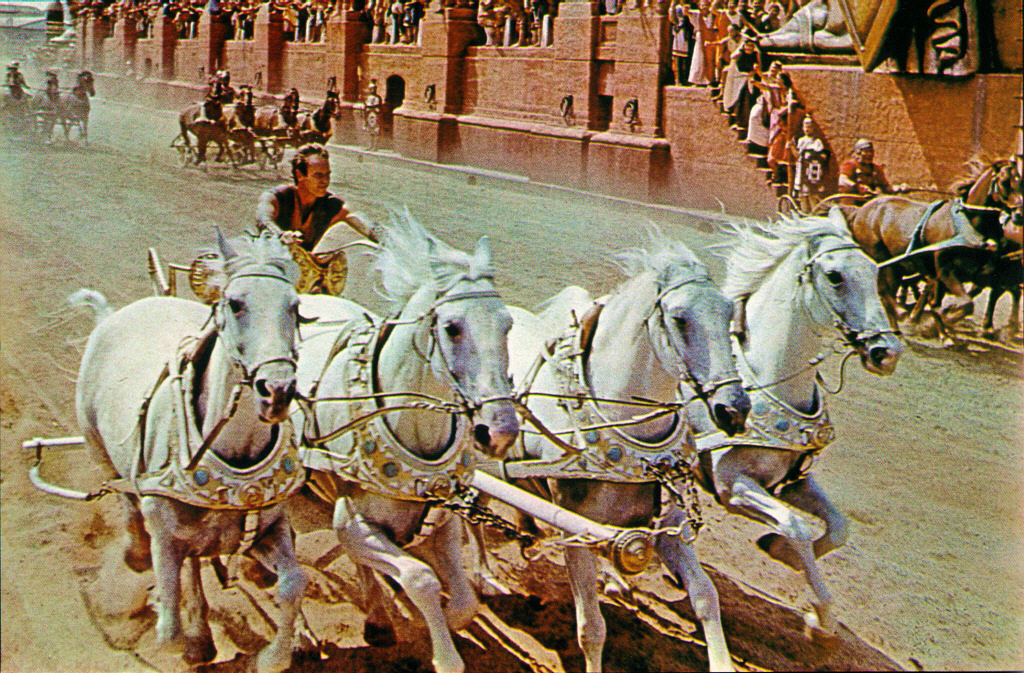
Divine Chariot Race

Hundreds of years ago Gregory of Nyssa, one of the early church fathers, wrote:  
“At horse races the spectators intent on victory shout to their favorites in the contest. From the stands they participate in the race with their eyes, thinking to incite the charioteer to keener effort, at the same time urging the horses on, while leaning forward and flailing the air with their outstretched hands instead of a whip. 
I seem to be doing the same thing myself, most valued friend and brother. While you are competing admirably in the ‘divine race’ along the course of virtue . . . I exhort, urge, and encourage you vigorously to increase your speed.”
There is a little word, “paraklesis,” that is used throughout the New Testament, from which we get our word encouragement or encourager. It literally means “called alongside to help.”  
 Here’s the truth of the matter:  we are called to be “bleacher people,” leaning forward and flailing the air in encouragement for one another in our victories and even in our defeats.   Are you?
Let us think of one another and how we can ENCOURAGE one another to love and do good deeds. Hebrews 10:24

The Miracle of Friendship

There's a miracle called friendship 

That dwells within the heart, 

And you don't know how it happens 

Or how it gets its start... 

But the happiness it brings you 

Always gives a special lift, 

And you realize that friendship 

Is God's most precious gift!

- B.J. Morbitzer

Thursday, November 11, 2010

Writing in Sand or Stone

Two friends were walking through the desert. During some point of the journey, they had an argument; and one friend slapped the other one in the face. The one who got slapped was hurt, but without saying anything, wrote in the sand: “Today my best friend slapped me in the face.”

They kept on walking, until they found an oasis, where they decided to take a bath. The one who had been slapped got stuck in the mire and started drowning, but the friend saved him. After he recovered from the near drowning, he wrote on a stone: “Today my best friend saved my life.”
The friend who had slapped and saved his best friend asked him, “after I hurt you, you wrote in the sand and now, you write on a stone, why?”

The friend replied “when someone hurts us we should write it down in sand where winds of forgiveness can erase it away. But, when someone does something good for us, we must engrave it in stone where no wind can ever erase it.”

Learn to write your hurts in the sand and to carve your blessings in stone.