Welcome to Albert's Sermon Illustrations

In this blog, I have collected many stories, quotes, jokes and ideas that I use regularly in my sermons.I have tried to put in the sources and origins of these illustrations. If I have missed some or gotten the wrong sources, please let me know. I will update them. Feel free to use these illustrations for the glory of God. If you have some illustrations that you like to contribute, kindly add them to my blog, so that I and others may benefit from them. God bless!
Reverend Albert Kang

P/S: This is a free site and thus it has advertisements that are not in the blogger's control. If some of them are offensive, please ignore them. Thank you for your understanding.
Showing posts with label Gregory of Nyssa. Show all posts

Monday, November 22, 2010

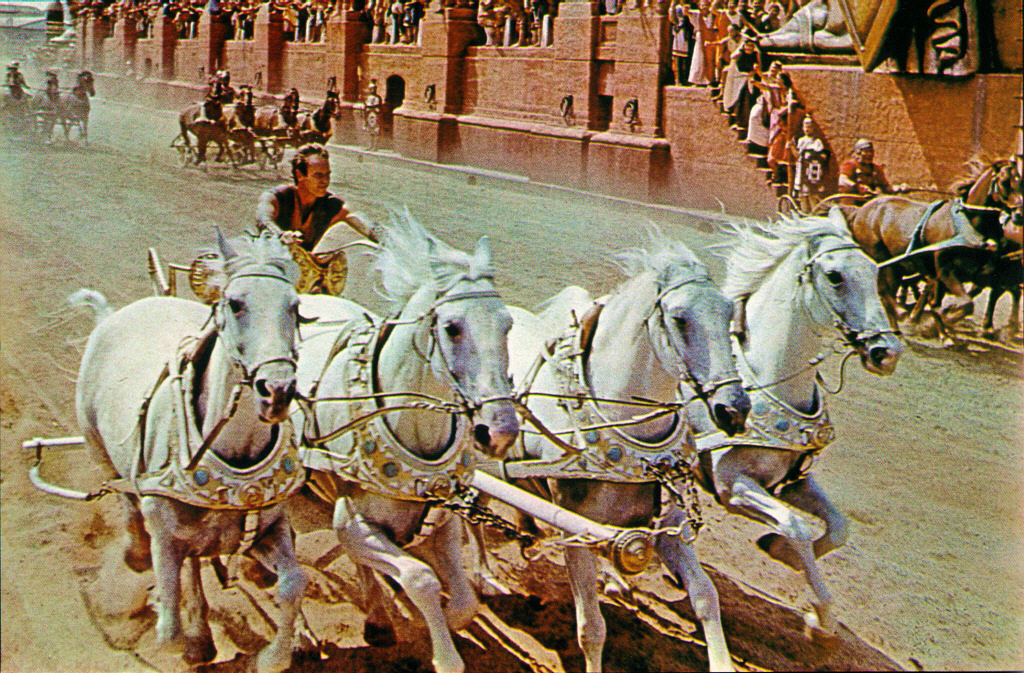
Divine Chariot Race

Hundreds of years ago Gregory of Nyssa, one of the early church fathers, wrote:  
“At horse races the spectators intent on victory shout to their favorites in the contest. From the stands they participate in the race with their eyes, thinking to incite the charioteer to keener effort, at the same time urging the horses on, while leaning forward and flailing the air with their outstretched hands instead of a whip. 
I seem to be doing the same thing myself, most valued friend and brother. While you are competing admirably in the ‘divine race’ along the course of virtue . . . I exhort, urge, and encourage you vigorously to increase your speed.”
There is a little word, “paraklesis,” that is used throughout the New Testament, from which we get our word encouragement or encourager. It literally means “called alongside to help.”  
 Here’s the truth of the matter:  we are called to be “bleacher people,” leaning forward and flailing the air in encouragement for one another in our victories and even in our defeats.   Are you?
Let us think of one another and how we can ENCOURAGE one another to love and do good deeds. Hebrews 10:24

Wednesday, November 17, 2010

Following God in Obscurity

In Christ Plays in Ten Thousand Places, Eugene Peterson recounts the story of the fourth century church father Gregory of Nyssa whose brother Basil had arranged for him to be made bishop of Cappadocia. 

"Gregory objected," Peterson writes. "He didn't want to be stuck in such an out-of-the-way place. His brother told him he didn't want Gregory to obtain distinction from his church but to confer distinction upon it." 

Is this not what Christ wants for us as well? To seek the good of the small places in which he has placed us and to confer distinction upon them by serving him with humility there? The path of glory is often an obscure one. It is the way of the cross.

—John Koessler, "George Bailey Lassos the Moon," on his blog A Stranger in the House of God (3-18-10)
--------------------
More about
Saint Gregory of Nyssa
Early Church Father and Doctor of the Church

Gregory of Nyssa was the younger brother of St. Basil the Great and St. Macrina.  Born around 330 AD, Gregory married and spent several years of his life in secular employment before he entered the monastery founded by his elder brother.  He was consecrated Bishop of Nyssa in 371 and fought tirelessly for the Trinitarian faith of Nicaea that was reaffirmed by the great Creed of the Council of Constantinople, which he attended.  In the last few years of his life, he traveled a great deal since he was in great demand as a preacher, teacher, and spiritual writer. 

St. Gregory of Nyssa was a theologian of great depth and originality.  He wrote famous treatises against trinitiarian herietics Eunomius and Apollinarius and instructed new Christians about the the Trinity, Incarnation, Redemption and Sacraments in his Catechetical Orations.  But his theological reflections far surpassed controversy and cathechesis--indeed, St. Gregory provides us with the first systematic presentation of Christian doctrine since Origen over 150 years earlier.  

Gregory wrote many reflections and commentaries on Scripture, most notably his Life of Moses and homilies on the Lord's Prayer, the Song of Songs, and the Beatitudes.  His most important contribution was in the area of spirituality.  While his brother gave eastern monasticism its structure and organization, Gregory provided its heart and mystical vision. For this reason he came to be know as "Father of Mysticism."

St. Gregory of Nyssa died around the year 395 AD and is revered as one of the greatest of the Eastern Church Fathers.  He, his brother Basil and their friend St. Gregory of Nazianzen, are known as the Cappadocian Fathers, from the region in modern Turkey from which they came.  His feast day is March 9th.