Welcome to Albert's Sermon Illustrations

In this blog, I have collected many stories, quotes, jokes and ideas that I use regularly in my sermons.I have tried to put in the sources and origins of these illustrations. If I have missed some or gotten the wrong sources, please let me know. I will update them. Feel free to use these illustrations for the glory of God. If you have some illustrations that you like to contribute, kindly add them to my blog, so that I and others may benefit from them. God bless!
Reverend Albert Kang

P/S: This is a free site and thus it has advertisements that are not in the blogger's control. If some of them are offensive, please ignore them. Thank you for your understanding.
Showing posts with label Heroes of Faith. Show all posts

Thursday, March 26, 2020

Wang Ming Dao - No More A Judas

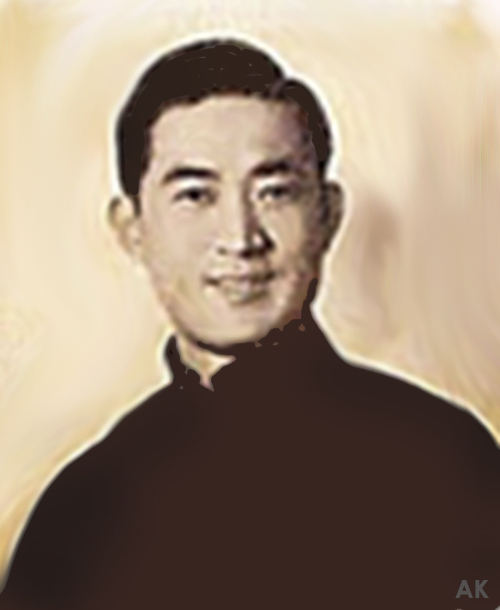
Wang Ming Dao and his wife, Liu Jingwen

Reverend Wang Ming Dao (王明道) served as the Pastor of Christian Tabernacle, Peking’s largest church. During Communist's persecution, he was thrown into prison because of his testimony and ministry. At the hands of his perpetrators, he was tortured for his faith.

Fearing even greater suffering, Dao recanted his belief in Christ and was released by the authorities. He quickly regretted his decision and was seen walking the streets of the city weeping and mumbling, “I am Judas! I have betrayed my Lord!”

Within a few weeks, he was unable to bear the guilt and shame any longer. He returned to the Communist authorities, confessed his faith in Christ, and asked to be put back in prison.

For the next twenty-seven years, he suffered the abuse of prison life but never again entertained the thought of denying his Lord. When Dao was released at the end of his life, the Chinese church considered him a hero who had given strength and assurance to the many who faced the perpetual threat of persecution and imprisonment.

Enduring faith will experience doubts, struggles, and disappointment. It happened to John the Baptist, to Paul, to Jesus and it will happen to every person who seeks to walk in Christ-like obedience. In times of spiritual crisis, may we be inspired by both the success and failure of people like Wang Ming Dao.
The Vision of His Glory, Anne Graham Lotz, 1996, p. 81

Friday, June 28, 2013

Auntie Deborah Wang - Never Alone

Auntie Deborah and her famous husband, Pastor Wang Ming Dao


By Dr. Harold J. Sala.

Never will I leave you; never will I forsake you. Hebrews 13:5

It is said that behind every great man is a great woman. Unquestionably, that was true of Wang Ming Dao. The woman, Deborah Wang, a frail but vibrant saint, endured what no woman should ever have to face. Her husband, Wang Ming Dao, was one of the unofficial architects of the house church movement in China, and when her husband was sentenced to prison for what the Chinese government termed "anti-revolutionary" activities, his wife followed.

For 20 years, this saintly woman was in prison, facing the bitter cold of northern Chinese winters with thin clothes and insufficient food, but she never complained.

In 1989 I met the Wangs for the first time. I'll never forget the afternoon I sat in the humble little apartment in Shanghai and listened to them recount their experiences. While I deeply admired and venerated Wang Ming Dao, I was drawn to the strength of this saintly woman whose smile came from her heart. As she talked about the years of imprisonment, I asked, "Did you ever lose hope?" (After all, 20 years of separation, with very little news and few letters from the one you loved so deeply, is a long time.) Her eyes spoke far more than her answer as she said, "No, never!"

After the Wangs were released from prison, their home became a refuge for those who needed encouragement and counsel. God only knows how many cups of tea Auntie Wang (as her friends called her) served to weary men and women who traipsed up the stairs to their flat for encouragement and help.

What a woman! Two weeks after her husband passed away, at the age of 91, I again visited Auntie Wang. The ashes of her late husband were in an urn on the table near the chair which Brother Wang had used as a pulpit to share the Word. My son-in-law and I sought to comfort her, quoting some of my favorite passages of Scripture. But it was Auntie Wang who really comforted us. She was in her mid-eighties. Successful surgery a few months before had removed one of the cataracts from her eyes, and few details escaped her. When a small piece of paper fell from my lap, it was she who quickly leaned over to pick it up.

"Auntie Wang," I said, "I will pray that you will not be lonely." Pausing for just a moment she spoke with a clear and resolute tone of voice, "I will not be lonely; I was not lonely before." It was what she didn't say that spoke the loudest. On a previous visit, she told me that she had seen her husband but three times during the twenty years of imprisonment. That one word, "before," said so much. I knew what she was thinking.

Those words rang in my ears when a close friend told how Deborah Wang had developed pneumonia and was taken to a Shanghai hospital. With no rooms available, she was given a temporary bed in a hallway, and there in the early hours of the morning on April 18, 1992, she met Him who had been her stay and companion for so many years. As the leaves of the trees were budding, following the cold of a Shanghai winter, Deborah Wang made her entrance into the presence of the Lord, where a faithful and devoted husband awaited her.

The saddest part to me was that she couldn't be surrounded by friends and flowers when the angel sweetly took her hand and escorted her across the threshold of death. But I am sure of one fact: While she was alone, she was not lonely. She had the promise of her Lord who said, "And surely I am with you, always...." (Matthew 28:20). Deborah Wang experienced that, both in life and in death.
Resource reading: Hebrews 13:1-5


Dr. Harold J. Sala, well known speaker, author and Bible teacher, has served as founder and President of Guidelines International, Inc., since 1963. He is the featured speaker on the daily "Guidelines-A Five Minute Commentary on Living" which is broadcast on over 1000 radio stations around the world and translated in over 15 languages. Author of over 40 books published in various languages and hundreds of publications. Residing in Mission Viejo, California, Harold and his wife, Darlene, have three adult children and eight well-loved grandchildren.


Friday, June 7, 2013

Ji Zhiwen 計志文(Andrew Gih) - A Fellow Worker of Evangelist John Sung


Andrew and Dorcas Gih
Ji Zhiwen 計志文(Andrew Gih) 1901-1985

Ji Zhiwen (Andrew Gih) was born on January 10th, 1901, in Shanghai, the oldest son in the family. His father, Ji Youren, a Confucian scholar, opened a school in his home and taught students there. From childhood, Ji Zhiwen received a traditional Confucian education from his father. His mother was a Buddhist, a vegetarian, virtuous and open-minded, though she maintained tablets of ancestors in the home, observed religious festivals, and worshiped the ancestors. Ji Zhiwen in his youth was quiet and reticent, and very awkward in relating to people. In his youth, he would go with his mother to the temple to offer incense and listen to the monk chant the scriptures; he even had an opportunity to skim over the books of gospel, but was totally uninterested and cold towards religion.

Zhiwen’s parents had four sons and three daughters, three of whom died in infancy. As he watched his little brothers’ rigid corpses being placed into square coffins and carried out to be buried by adults and saw the grieved expressions and the tears of the mourners, he couldn’t understand the meaning of death, but the questions of why people die and what happens after death were lodged deeply in his mind.

At the age of twelve, his father came down with a serious illness, which proved to be incurable, and he quickly died. After his father’s death, Zhiwen once again followed his mother around as she rose early and retired late, tilled the field and made clothing, upholding the family all by herself. He often helped her work in the field, spread fertilizer, carry water, etc. Seeing his mother working so hard, he resolved that when he grew up he would certainly make enough money to repay his mother as a filial son.

In order to make ends meet, Ji Zhiwen again became an apprentice in a cloth shop. As he became immersed in business circles, he picked up not a few bad habits. At the age of 18, in order to learn English, he entered a middle school run by Western missionaries (the CIM’s Bethel Secondary School). Although he had absolutely no interest in the religious activities of the school or the Bible class, because of school regulations he had to take his Bible along and participate. Unexpectedly, the Bible became for him a textbook for studying English. The words of Jesus as recorded in the Bible made a deep impression upon him, gradually convincing him of the greatness of Jesus.

Ji Zhiwen became a Christian

One day, a CIM missionary came to preach at the school. His topic was, “All have sinned and fall short of the glory of God.” Ji Zhiwen’s heart was struck by the force of the message and God’s love flooded his heart, convicting him of his sin. That night he kneeled before God for the first time, as he cried with a loud voice, “My God, you are my Savior; have mercy on this sinner!” Immediately, God removed his heavy burden and filled his heart with peace and joy.

He was elected as an officer of the Shanghai post office in 1924, with a handsome salary, a good position in society, and a promising career ahead of him. All this did not satisfy his heart, however. The next year, Wang Zai came to Shanghai for an evangelistic meeting. Hearing him, Ji Zhiwen was moved deeply and requested baptism from Wang Zai. After his baptism Ji was even more hungry for the truth of the Bible, and eagerly took part in every sort of church activity. He gave himself the Bible name, “Andrew,” and resolved to become a man who led others to the Lord. Soon he had led his mother and two younger sisters to believe in Christ. His Buddhist grandmother was a first strongly opposed to the Gospel, but later she joined her family in receiving Christ.

In 1925, at a revival meeting led by the Western missionary John Gu, Ji Zhiwen once again responded to the call of God and made a decision to commit himself to full-time work as a preacher. But how could he explain leaving his well-paying job at the post office? God heard his prayer, however, while he was praying gave him a clear vision, so he finally resigned his position, said “Farewell” to his mother, and entered upon the path of the life as a minister of the Gospel.

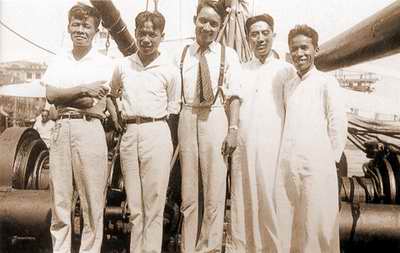
In 1931, John Sung (宋尚節) [1st left] and Andrew Gih (計志文) [2nd from right] formed the Bethel Worldwide Evangelistic Band to reach China for Christ.

He began by associating with the evangelist Mary Stone (Shi Meiyu) and pastor Ding Limei as he learned from their experience in evangelism, accompanying Mary Stone often to many places for revival and evangelistic meetings. In 1926, he received ordination from the Rev. Mr. Sontas. From that time, he began traveling to Guangxi, Guangdong, Fujian, Xiamen and other locations conducting evangelistic and revival meetings. The Holy Spirit was with him, enabling him to preaching with great power resulting in hundreds, even thousands of people repenting and deciding to follow the Lord.

Ji Zhiwen returned to Shanghai from his evangelistic tours on October 1st, 1928, for his wedding to Dorcas Zhang, a fellow member of the Bethel organization, at the Bethel Church. Hardly a week later, the new couple went to the Baptist Church at Hangzhou to preach, spending their honeymoon thus in evangelistic ministry.

The Chinese church experienced a great revival in 1927, which lasted into the 1930s. Ji Zhiwen was among the leaders of this revival movement. In February, 1931, he established the “Bethel Evangelistic Band” in Shanghai. This organization was part of the Methodist Church, prominent members of which included Li Daorong, Lin Jingkang, Nie Ziying, John Shi, and Song Shangjie (John Sung). Beginning February 18, over the next four years they traveled 50,000 kilometers, visited 133 cities, conducted 3389 meetings, and preached the Gospel to 500,000 people, of whom 50,000 made professions of faith. Among those who repented and turned to the Lord were Chinese and foreigners; workers, farmers, business people; youth and soldiers; and corrupt officials, bandits, gangsters, and murderers. Their powerful preaching and personal testimonies brought revival wherever they went. In order to meet the increasing needs of the evangelistic work, they established 10 regional teams in every part of the country for evangelism and revival meetings. In 1933, they even formed “battlefield evangelistic teams” especially to preach the Gospel to officers and soldiers fighting the Japanese. Under their inspiration, many local churches also formed evangelistic teams.

Ji Zhiwen and the Bethel Band not only spread the Gospel fire in both urban and rural areas in the south and north China, but also sowed Gospel seeds in the border areas of Manchuria, Inner Mongolia, Yunnan, Tibet, and Xinjiang. In the latter part of 1938, Ji and Dr. James Edwin Orr passed through Yunnan to Vietnam, evangelizing in Hanoi and Haiphong; they also conducted a nation-wide evangelistic meeting in Saigon, bringing a great revival to the church in Vietnam. In the process of their preaching, they employed personal testimonies, outdoor meetings, large Gospel meetings, as well as revival and spiritual life methods. Miracles often accompanied their proclamation. Ji Zhiwen always ascribed the accomplishments of the Bethel Bands’ endeavors to the work of the Holy Spirit.

As the war against Japan expanded, Ji Zhiwen took the Bethel co-workers, including Mary Stone and Miss Jennie V. Hughes, along with the seminary students and more than 100 orphans, to Hong Kong. In Kowloon he established a church, an elementary school, and an orphanage. The war had created many homeless orphan children; Ji responded to the call of Song Meiling (Madame Chiang Kai-shek) and established orphanages in Hong Kong and Guizhou for these victims of warfare. He later went to America to preach and to promote the needs of orphans, receiving support from American Christian friends, who sponsored more than a thousand orphans as well as providing support for the orphanages opened by Ji. Mrs. Ji returned to Shanghai from Hong Kong, where she rented a three-story building and opened an orphanage on Da Xi Road, obtaining the very effective assistance of Miss Ou Jialing.

In 1943, after Shanghai fell to the Japanese, Ji again led more than a hundred war orphans, seminary students, faculty, and staff in an exodus to Guizhou. After a long and arduous journey, they finally reached the orphanage in Bijie, Guizhou. As a result of the difficulties of the long journey, his tuberculosis flared up, causing him to vomit blood constantly, and forcing him into the hospital for treatment. At this time, he still managed to make it to churches and universities to preach and teach.

From 1946 to 1949, Ji established the Chinese Evangelization Society in Shanghai, undertaking both evangelistic and orphanage work. By the end of 1949, they had already taking in more than 100 orphans. But the new government would not allow private organizations to operate orphanages, so the institution run by Mr. and Mrs. Ji was closed down not long afterwards.

In February of 1949, Ji Zhiwen traveled to America to serve as speaker at the annual meeting of American Christians held in Chicago. Mrs. Ji went to Hong Kong for treatment for tuberculosis. When the political situation in China changed dramatically, the two moved to Hong Kong. Since he could not return to the mainland of China, Ji began holding evangelistic meetings in the Kuai Le (“Happiness”) Theater. Weekly attendance on Sunday mornings was more than 1200 people. In August, 1951, he formally established a church, along with Paul Shen and others. With increasing numbers coming, they took up and offering to build their own meeting place. The structure was completed in October of 1956 and was given the name, “Canaan Church of the Chinese Evangelization Society.”

In 1950, Cassada College in Oregon, America, conferred upon Ji Zhiwen an honorary Doctorate of Letters (D. Litt.).

The Chinese Evangelization Society began its work in Taiwan in 1948 when Paul Shen was sent by Ji Zhiwen to Taichung to establish a ministry there. Beginning with nothing, by 1952 they had erected a meeting hall with a capacity to seat more than 400 people, with the name, Si En Church. In February of 1952, Ji presided at the dedication ceremony. In the following years, the Society opened work in Taipei, Pingtung, Taidung, Yilin, Yilan, Luodong, Gangshan, Hsinchu and other places, and conducted evangelistic work and opened churches among the aboriginal people as well.

In the early 1950s, Ji extended his evangelistic ministry to South East Asia. In the next decade, he engaged in pioneer evangelism in the Philippines, Malaysia, Singapore, Thailand, Vietnam and other countries; built churches; conducted revival and evangelistic meetings. In each place, churches experienced revival, as thousands dedicated themselves to God. Ji Zhiwen’s influence upon Chinese churches in South East Asia was profound. More than that, his journeys took him to more than fifty nations, and he circled the globe more than 15 times.

In the course of his ministry, Ji met the needs of the Chinese churches by establishing theological colleges, including Bethel Seminary in Shanghai, Taichung Bible College, South East Bible College in Indonesia, Hong Kong Bible College, and Bethel Bible College in Thailand, training thousands of preachers as a result. In 1981, in order to honor his work, the South East Bible College in Indonesia dedicated the “Ji Zhiwen Memorial Hall,” a church building with a capacity of more 1,200.

Ji Zhiwen was always a philanthropist, establishing schools, kindergartens, and day care centers for children affected by disasters and for orphans, including “En Ci Orphanage in Macao; Malang Middle School in Indonesia; Holy Word Children’s Home in Taipei; Holy Word Kindergarten in Malaysia, and many more, providing food, clothing, shelter, and education for this homeless young people. He not only saved the lives of thousands, but turned them into people with a sense of responsibility for society.

Ji Zhiwen greatly emphasized Christian literature work, as seen in his establishment of a publishing organization. Already in 1949, he had set up a publications division in the Chinese Evangelization Society; the name was changed to Holy Word Press in June, 1962. It issued “Life Magazine”; Gospel tracts; evangelistic booklets; and Christian books.

Ji Zhiwen went to heaven at age of 85

Ji Zhiwen officially retired at the Los Angeles headquarters of the Chinese Evangelization Society in October, 1978. He had suffered from tuberculosis since youth, often coughing up blood, but God supported him, greatly used him, and accomplished great things through him. On January 30, 1985, he underwent surgery for lung cancer. He died peacefully on February 13th at the age of 85. A memorial service was held for him on February 23rd at Forest Lawn in Glendale, California, at which his co-worker the Rev. Xiao Zhenxiang, presided; Lin Jingkang preached the sermon; Li Qirong sang a solo, “Holy city,” in order to commemorate the life of this faithful and fruitful servant of God.

The Jis had no children. Ji Zhiwen preached mostly in Chinese, though he could preach and teach in English also. Aside from an autobiography, My Wonderful God, he wrote several books in English:Launch Out into the Deep; Twice Born - and Then?; Into God’s Family; and The Fire of Revivalism in Chinese. He was a kind and easy-going person, and usually enjoyed good relationships with his coworkers.

Saturday, June 1, 2013

A Brave Soldier of God

“Be faithful, even to the point of death, and I will give you the crown of life.” Revelation 2:10

Roy Pontoh, 15 years old, Indonesia, 1999

The teens could tell that the shouts and chanting were getting closer and closer. An older teen nervously looked at his friend. "The Muslims are coming. We’d better hide the kids," he said. Others, following his lead, helped the smaller children find hiding places in the buildings nearby. Then they hid themselves.

It was January and a crowd of mostly Christian children and teenagers had gathered for a Bible camp at the Station Field Complex of Pattimura University on the Island of Ambon, Indonesia. When the camp was over, cars came to take the laughing, rejoicing children back to their homes. But there were not enough cars to hold the young people.

Mecky Sainyakit and three other Christian men had gone to Wakal village to try to ask the military for additional transportation and the provision of security to take the rest home. But they had not yet come back.

What the kids waiting for rides home didn’t know was that on their way to the village, the men were attacked by a Muslim mob, who pulled them from their car and out onto the road. Mecky and one of the other men were stabbed to death, and later their bodies were burned by the mob. The two other men escaped with their lives.

Back at the university crowds of Laskar Jihad fighters and muslim extremists from the surrounding villages started to gather at the gates, so the remaining adults started to hide the youth around the building, then hid themselves and began to pray.

Eventually the mob broke into the buildings armed with machetes, spears, knives and clubs. They found many of the youth and beat them. The girls and women were forced out of the building, but the boys and men were kept inside. Roy Pontoh was singled out and dragged from the group.


He was asked "Who are you?" and replied "I am a soldier (warrior) of Christ" to which he was struck on the arm with a machete. He was asked the same question again and gave the same reply to which he was struck on the other arm. 

A third time he was asked the same question and replied as before. This time Roy was struck on his stomach with the machete and as he died his last words were "Jesus" (some accounts speak of a prior blow to the stomach ripping into Roy's Bible that he was holding).

The mob dragged Roy’s body out and threw it in a ditch. Four days later, his family found it. Even though they were wracked with grief, Roy’s parents stand proud of their son, who stood strong in his faith to the end.

~~
Whoever declares openly – speaking our freely - and confess that he is My worshipper and acknowledge Me before men, the Son of man also will declare and confess and acknowledge him before the angels of God. -Jesus (Luke 12:8 AMP)

Monday, March 26, 2012

Henry Nott's First Convert in 22 Years

In 1797, Henry Nott was the first missionary to Tahiti. During his first five years on the mission field, three missionaries were killed and four others deserted the field. Henry built a friendship with the island’s chief Pomare, and soon new missionaries arrived to help support Henry.

Then in 1803, Pomare he died and his son assumed the title Pomare II. He was even more vicious and violent than his father. After eight years of fruitless labor and the missionary house being ransacked, six more missionaries abandoned Tahiti, again leaving Nott alone to minister. He repeatedly went on long, arduous preaching tours throughout the island. He spent months and years over his lexicons, in the study of Hebrew and Greek, and in the translation of the New and Old Testaments into the language of Tahiti.

Henry did not see his first convert until he had been in Tahiti 22 years. It took several decades, but he was successful in translating the Bible into the Tahitian language.

Henry returned to England only two times during 47 years on the field. His perseverance at preaching the Word finally took hold in Tahiti.  

The Lord asks us to be faithful both in season and out of season. In His time, He will bless. Today in prayer, praise Jesus for His great patience and seek to be patient in all that you do.

"Obedience is the fruit of faith; patience the bloom on the fruit."  - Christina Rossetti

By Peter Kennedy

Thursday, October 13, 2011

Translator William Tyndale Strangled and Burned


How many Bibles do you have in your house? For most of us, Bibles are easily accessible, and many of us have several. That we have the Bible in English owes much to William Tyndale, sometimes called the Father of the English Bible. 90% of the King James Version of the Bible and 75% of the Revised Standard Version are from the translation of the Bible into English made by William Tyndale, yet Tyndale himself was burned at the stake for his work on this day, October 6, 1536.


Back in the fourteenth century, John Wycliffe was the first to make (or at least oversee) an English translation of the Bible, but that was before the invention of the printing press and all copies had to be hand written. Besides, the church had banned the unauthorized translation of the Bible into English in 1408.


Over one hundred years later, however, William Tyndale had a burning desire to make the Bible available to even the common people in England. After studying at Oxford and Cambridge, he joined the household of Sir John Walsh at little Sudbury Manor as tutor to the Walsh children. Walsh was a generous lord of the manor and often entertained the local clergy at his table. Tyndale often added spice to the table conversation as he was confronted with the Biblical ignorance of the priests. At one point Tyndale told a priest, "If God spare my life, ere many years pass, I will cause a boy that driveth the plough shall know more of the Scriptures than thou dost."


It was a nice dream, but how was Tyndale to accomplish this when translating the Bible into English was illegal? He went to London to ask Bishop Tunstall if he could be authorized to make an English translation of the Bible, but the bishop would not grant his approval. However, Tyndale would not let the disapproval of men stop him from carrying out what seemed so obviously God's will. With encouragement and support of some British merchants, he decided to go to Europe to complete his translation, then have it printed and smuggled back into England.


In 1524 Tyndale sailed for Germany. In Hamburg he worked on the New Testament, and in Cologne he found a printer who would print the work. However, news of Tyndale's activity came to an opponent of the Reformation who had the press raided. Tyndale himself managed to escape with the pages already printed and made his way to the German city Worms where the New Testament was soon published. Six thousand copies were printed and smuggled into England. The bishops did everything they could to eradicate the Bibles -- Bishop Tunstall had copies ceremoniously burned at St. Paul's; the archbishop of Canterbury bought up copies to destroy them. Tyndale used the money to print improved editions!


King Henry VIII, then in the throes of his divorce with Queen Katherine, offered Tyndale a safe passage to England to serve as his writer and scholar. Tyndale refused, saying he would not return until the Bible could be legally translated into English. Tyndale continued hiding among the merchants in Antwerp and began translating the Old Testament while the King's agents searched all over England and Europe for him.


Tyndale was finally found by an Englishman who pretended to be his friend but then turned him over to the authorities. After a year and a half in prison, he was brought to trial for heresy -- for believing, among other things, in the forgiveness of sins and that the mercy offered in the gospel was enough for salvation. In August 1536, he was condemned; on this day October 6, 1536 he was strangled and his body burned at the stake. His last prayer was "Lord, open the King of England's eyes." The prayer was answered in part when three years later, in 1539, Henry VIII required every parish church in England to make a copy of the English Bible available to its parishioners.


Bibliography:
Adapted from an earlier Christian History Institute story.
Bowie, Walter Russell. Men of Fire. New York: Harper and Brothers, 1961.
Daniell, David. William Tyndale, a biography. New Haven: Yale University Press, 1994.
Dictionary of National Biography. Edited by Leslie Stephen and Sidney Lee. London: Oxford University Press, 1921 - 1996.
Kunitz, Stanley L. British Authors Before 1800; a biographical dictionary. New York: H. W. Wilson, 1952.
Mozley, J. F. William Tyndale. London: Society for Promoting Christian Knowledge; New York: The Macmillan company, 1937.
Sampson, George. Concise Cambridge History of English Literature. Cambridge, 1961.
"Tyndale or Tindale, William." The Oxford Dictionary of the Christian Church. Edited by F. L. Cross and E. A. Livingstone. Oxford, 1997.
Wild, Laura Huld. The Romance of the English Bible; a history of the translation of the Bible into English from Wyclif to the present day. Garden City, New York: Doubleday, Doran, 1929.
Various encyclopedia articles.
Last updated July, 2007


Find this article at: http://www.christianity.com/churchhistory

Saturday, April 2, 2011

Elizabeth Dirks Drowned as Anabaptist

An Anabaptist lady being drowned for her belief
Elizabeth Dirks was a trailblazer and a woman of great courage. Raised in a nunnery in East Friesland, she learned to read Latin and read the Bible through and through. She became certain that monasticism was not the way taught in Scripture. With the help of milkmaids she escaped and became a follower of peaceful Menno Simons. She was one of the first Reformation women ministers, probably a deaconness.


In 1549, Catholic authorities arrested her. When they found her Bible they knew they had the person they were looking for. Mistakenly, they thought she was the wife of Menno Simons. When they tried to get her to take an oath at her interrogation, she refused, saying Christ had taught that our yes should mean yes and our no mean no.

The record of her inquisition shows that the examiners asked her to inform on those whom she had taught. Knowing that this would lead to their arrest, she refused.


"No, my Lords, do not press me on this point. Ask me about my faith and I will answer you gladly."

"We will make it so tough that you will tell us," they threatened.


When she would not reveal who had baptized her or whom she had taught, they questioned her beliefs. She insisted that church buildings were not the house of God, for our bodies are the temple of the Holy Spirit. She denied that the New Testament spoke of the bread and wine as a sacrament but rather as the Lord's Supper. Asked if she were saved by baptism, she replied, "No, my Lords. All the water in the sea cannot save me. All my salvation is in Christ, who has commanded me love the Lord, my God, and my neighbor as myself." She denied that priests have authority to forgive sins--only Christ.


Still refusing to reveal who had baptized her, she was taken to the torture chamber and said, "So far we have treated you gently. Since you won't confess, we will put you to the torture."


A man named Mr. Hans applied screws to a thumb and fingers until blood spurted from under her fingernails. Still she wouldn't give away her friends, but her agony was so great that she cried aloud to Christ and received relief. So they lifted her skirt to apply torture to her shins. She pleaded that she had never allowed anyone to touch her body and they promised to respect her.


Then they crushed her leg bones with screws until she fainted. The men thought she was dead, but she came to and assured them she was not. Realizing that they could get nothing out of her, the authorities condemned her to die. Rather than burn her, as was customary, they tied her in a bag and drowned her on this day, March 27, 1549.

Bibliography:

  1. Bainton, Roland H. Women of the Reformation in Germany and Italy. Minneapolis, Minnesota: Augsburg, 1971.
  2. Williams, George Huntston. The Radical Reformation. Philadelphia, Pennsylvania: Westminster Press, 1962.

Saturday, March 12, 2011

Amy Carmichael's First Act of Kidnapping

Amy Carmichael was a kidnapper. Many times over, in fact! On this day, March 6, 1901, she sheltered her first temple runaway, a young girl dedicated to the Hindu gods and forced into prostitution to earn money for the priests. Technically that made her a kidnapper. Over the years, Amy rescued many other children, often at the cost of extreme exhaustion and personal danger. When she rescued five-year-old Kohila, the child's guardians wanted her back. Amy refused to return the little girl to certain abuse. Instead, she arranged for her to "disappear" to a safe place. The plot was discovered. Prosecutors brought charges against Amy. She faced a seven year prison term.

Irish-born Amy was a most unlikely heroine. She suffered neuralgia, a disease of the nerves that made her whole body weak and achy and put her in bed for weeks at a time. Friends thought she was foolish when she announced she was going to be a missionary. They predicted that she would soon be back in England for keeps. But Amy was sure that God was calling her to go overseas. All of her life, she had been learning to listen to his voice.

One of the first incidents occurred when she was a child. Mother had said that if Amy prayed, the Lord would answer. Amy had brown eyes. She prayed for blue. In the morning she jumped out of bed and ran to the mirror. Mrs. Carmichael heard her wail in disappointment. It took Mrs. Carmichael several minutes of careful explanation before Amy understood that "no" was an answer too. God meant Amy to have brown eyes for a reason, explained Mrs. Carmichael. Amy wasn't so sure. Smiling Irish blue would always be her favorite color, even if God said "No."

Amy with rescued children
As a youth Amy thought she was a Christian, but an evangelist showed her that she needed a personal commitment to Christ. She made it. Service to Him became the center and passion of her life. The year that Mr. Carmichael died unexpectedly, Amy started classes and prayer groups for Belfast ragamuffins. She also began a Sunday work with the "shawlies." These were factory girls so poor that they could not afford hats to wear to church and wore shawls instead. Respectable people didn't want anything to do with them. Amy saw that they needed Christ just the same as their supposed "betters." So many shawlies attended Amy's classes that she had to find a building large enough to hold three hundred and more.

The Carmichaels lost all their money through financial reverses and a change became necessary. Mrs. Carmichael decided to move to England and work for Uncle Jacob. Amy and another sister joined her. Uncle Jacob asked Amy to teach his mill workers about Jesus. Amy threw herself into the work, living near the mill in an apartment infested with cockroaches and bed bugs. However, she was constantly sick with neuralgia and had to lie in bed for days at a time. It was clear she must give up the work. Faith and circumstances eventually led Amy to India where she began her rescue work with temple children. Dressed in a sari, her skin stained brown, she could pass as a Hindu. Now she understood why God had given her brown eyes. Blue eyes would have been a dead giveaway!

Amy did not go to prison. A telegram arrived on February 7, 1914, saying, "Criminal case dismissed." No explanation was ever forthcoming, but those who worship Amy's Lord have no doubt that He had a hand in the decision.

Bibliography:
  1. "Carmichael, Amy." Biographical Dictionary of Evangelicals. Timothy Larsen, editor. Downers-Grove, Illinois: Intevarsity Press, 2003.
  2. Davis, Rebecca Henry: With Daring Faith. Greenville, South Carolina: Bob Jones University, 1987.
  3. Houghton. Amy Carmichael. London: Hodder and Stoughton.
Source:
http://www.christianity.com/ChurchHistory/11630667/  

Sunday, January 9, 2011

Power To Pump Well Water

C.T. Studd shortly after his arrival in the African bush (1910)
I don’t know if you’ve heard the story of C. T. Studd the great Christian missionary. He went to a fair years and years ago and was captivated by a man pumping a well. 

The thing that grabbed him was how fast he was pumping and how long he was able to pump. He said to himself, "No man can do that. What kind of vitamins does he take? What kind of exercise program is he on?" He walked over to get a closer look. He found that the man dressed in Oriental garb was not a man. He was a stick figure. His elbows were hinges. He was not pumping the well, the well was pumping him. It was an artesian well. You see, there was a power that turned the man.

I believe that’s exactly what Paul is saying. He says, "I want you to know something. I want you to know it’s not you doing it for God. It’s God doing it in and through you as you bow before Him." Listen, it’s a 200% relationship. It’s 100% my willingness to obey, yield and bow, but it’s also 100% His power, His presence and what He can do in and through me that I cannot do and certainly will never deserve.

Tuesday, November 23, 2010

Rachel Scott - The Unstoppable Teenager

The story of Rachel Scott, a teenage victim of Columbine High School (USA) tragedy. It's another powerful tale of unstoppable worship. 

On 20 April 1999, two bitter twisted students entered the gounds of the school with guns and explosives, planning to wreak havoc. One of the grudges they were bearing was against Christians, and when they found Rachel Scott that grude was made very clear. 

The killers shot her twice in the legs and once in the upper body. As she struggled to crawl away to safety, they pulled her up by the hair, and asked, "Do you believe in God?" They thought they'd won the battle; expecting her to back down from her faith with whimpering "no". But this bleeding, unstoppable bravely affirmed, "You know I do." Furious with that answer they yelled, "Then go be with Him" and shot her right through the head."

Imagine the heart of God in that moment, as one of His precious worshipers threw her life on the line for His glory. In a gruesome moment of decision, she chose His honour over her survival. And if it affects us so much, imagine what effect it must have on the heart of Jesus.

By Ricky Sim

Sunday, November 14, 2010

The Evil Of Slavery

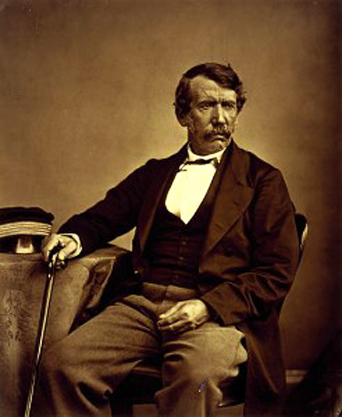
Dr. David Livingstone, the Scottish missionary explorer, awakened the world to the horror of the Arab slave trade, which he called a "monster of iniquity brooding over Africa." By publicizing the evil of slavery, Livingstone worked effectively to see it abolished. 

For every 20,000 slaves captured and exported, he estimated 100,000 Africans were killed, wounded, or died of disease on the slave trails. He wrote: "The many skeletons we have seen along the paths of the wilderness attest the awful sacrifice of human life that must be attributed to this trade in hell."

Today, there are millions who are enslaved by sins. The Lord Jesus has awakened us all to that fact. He wants us to be His witnesses to share the Good News of salvation and liberation from sins through His completed work on the Cross. 

Adapted from 'Dr. Livingstone, I Presume?' Church History
Source:http://www.christianity.com/ChurchHistory/11630560/