Welcome to Albert's Sermon Illustrations

In this blog, I have collected many stories, quotes, jokes and ideas that I use regularly in my sermons.I have tried to put in the sources and origins of these illustrations. If I have missed some or gotten the wrong sources, please let me know. I will update them. Feel free to use these illustrations for the glory of God. If you have some illustrations that you like to contribute, kindly add them to my blog, so that I and others may benefit from them. God bless!
Reverend Albert Kang

P/S: This is a free site and thus it has advertisements that are not in the blogger's control. If some of them are offensive, please ignore them. Thank you for your understanding.
Showing posts with label Slavery. Show all posts

Thursday, April 21, 2011

The Englishman and His Slave

Back in the 1800s, a young Englishman traveled to California in search of gold. After several months of prospecting, he struck it rich. On his way home, he stopped in New Orleans. Not long into his visit, he came upon a crowd of people all looking in the same direction. Approaching the crowd, he recognized that they had gathered for a slave auction. Slavery had been outlawed in England for years, so this young man's curiosity drew him to watch as a person became someone else's property. He heard "Sold!" just as he joined the crowd. A middle-aged black man was taken away.

Next a beautiful young black girl was pushed up onto the platform and made the walk around so everyone could see her. The miner heard vile jokes and comments that spoke of evil intentions from those around him. Men were laughing as their eyes remained fixed on this new item for sale.

The bidding began. Within a minute, the bids surpassed what most slave owners would pay for a black girl. As the bidding continued higher and higher, it was apparent that two men wanted her. In between their bids, they laughed about what they were going to do with her, and how the other one would miss out. The miner stood silent as anger welled up inside of him. Finally, one man bid a price that was beyond the reach of the other. The girl looked down. The auctioneer called out, "Going once! Going twice!"

Just before the final call, the miner yelled out a price that was exactly twice the previous bid, an amount that exceeded the worth of any man. The crowd laughed, thinking that the miner was only joking, wishing that he could have the girl himself. The auctioneer motioned to the miner to come and show his money. The miner opened up the bag of gold he had brought for the trip. The auctioneer shook his head in disbelief as he waved the girl over to him.

The girl walked down the steps of the platform until she was eye-to-eye with the miner. She spat straight in his face and said through clenched teeth, "I hate you!" The miner, without a word, wiped his face, paid the auctioneer, took the girl by the hand, and walked away from the still-laughing crowd.

He seemed to be looking for something in particular as they walked up one street and down another. Finally he stopped in front of some sort of store, though the slave girl did not know what type of store it was. She waited outside as the dirty-faced miner went inside and started talking to an elderly man. She couldn't make out what they were talking about. At one point the voices got louder, and she overheard the store clerk say, "But it's the law! It's the law!" Peering in, she saw the miner pull out his bag of gold and pour what was left of it on the table. With what seemed like a look of disgust, the clerk picked up the gold and went back in the room. He came out with a piece of paper, and both he and the miner signed it.

The young girl looked away as the miner came out the door. Stretching out his hand, he said to the girl, "Here are your emancipation papers. You are free." The girl did not look up. He tried again. "Here. These are papers that say you are free. Take them." "I hate you!" the girl said, refusing to look up. "Why do you make fun of me?" "No, listen" he pleaded. "These are your freedom papers. You are a free person." The girl looked at the papers, then looked at him, and looked at the papers once again. "You just bought me?and now, you're setting me free?" "That's why I bought you. I bought you to set you free." The beautiful young girl fell to her knees in front of the miner, tears streaming down her face. "You bought me to set me free! You bought me to set me free!" she said over and over. The miner said nothing. Clutching his muddy boots, the girl looked up at the miner and said, "All I want to do is to serve you- because you bought me to set me free!"

Thursday, November 18, 2010

Learning from Pigeons

"Nothing in all creation is hidden from God's sight. Everything is uncovered and laid bare before the eyes of him to whom we must give account."1

You may have read about an experiment where "pigeons were put in cages with one green and one red button. In one cage, if the birds pecked the green button they got food every time. In the other, the green button yielded food erratically and the pigeons had to persist to get enough food. 

In both cases, pecking the red button did nothing. Both sets of birds thrived, learning what they had to do to survive and ignoring the red button that yielded no food. But when the birds that were used to getting a reward every time were put in the cage that fed them only occasionally, they failed to adapt; they hit their heads against the cage and pecked wildly at everything in sight."2

Birds and animals can be very smart and quickly learn to pursue activities that produce positive results while avoiding activities that don't. Pity we humans aren't always as smart. Too many of us invest our lives in empty, meaningless or even harmful activities and relationships, and have a way of continually hitting red buttons that always result in getting negative responses.

Others, who, like the pigeons that were used to getting rewarded all the time when put in the cage where they were rewarded only occasionally, couldn't cope, so people who, when growing up, were overprotected, spoiled, or had parents that did far too much for them, have a difficult time adjusting to adult life and accepting personal responsibility. Also as adults, when we, other organizations, and/or the government do for others what they CAN and NEED to do for themselves, we keep them over-dependent and irresponsible.

As adults we need to eliminate (overcome) our own red buttons that trigger our unresolved issues from the past, and not purposely hit others' red buttons that never result in obtaining what we need or want.

Furthermore, we need to learn through experience and hard work to accept personal responsibility for every area of our life. True, we were not responsible for our upbringing and early training, but as adults we are totally responsible for our recovery, our actions, our well-being, for who and what we become, and for every area of our life. To expect otherwise is self-defeating and ultimately self-destructive.

Most important of all is that we need to remind ourselves that we are not only responsible for ourselves and what we do, but we are also responsible before God and one day will be required to give an account of our life to him.

Suggested prayer: "Dear God, thank you for the gift of life and for all the blessings you have given so freely to me. Help me to see issues in my life that I need to resolve and overcome, to avoid unnecessarily hitting others' red buttons, and help me to accept personal responsibility for every area of my life so that when I stand before you, I will hear your welcoming words, 'Well done, good and faithful servant. Enter into the joy of your Lord. Thank you for hearing and answering my prayer. Gratefully in Jesus' name. Amen."

1. Hebrews 4:13 (NIV).
2. Michael Josephson in Character Counts. www.charactercounts.org


By Dick Innes <:))))><

Wednesday, November 17, 2010

John Newton Wrote Amazing Grace

In a small cemetery of a parish churchyard in Olney, England, stands a granite tombstone with this inscription: “John Newton, clerk [pastor], once an infidel and Libertine, a servant of slavers in Africa, was, by the rich mercy of our Lord and Savior Jesus Christ, preserved, restored, pardoned, and appointed to preach the Faith he had long labored to destroy.” 

You may not remember his name, but all of us know the song he wrote as a testimony of his life: “Amazing Grace.” 

(Robert Renberg Jr, Grace Bible Church, Michigan)

More About John Newton

John Newton (1725-1807) was a former English navy midshipman who deserted and eventually became a servant to a slave-trader.  Rescued from servanthood, he was converted to Christianity in 1748 at the age of 23.  For the next six years, Newton commanded a slave ship.  An avid reader, he educated himself by reading the Bible and other classic literature.  Due to ill health, he abandoned the sea and took a job in Liverpool for nine years, during which time he interacted with George Whitefield and John Wesley.  He was ordained to the curacy of Olney in 1764.  

While pastoring in Olney, Newton published hymns, of which his most well-known would become the timeless classic, Amazing Grace.  

During this time he came to deeply regret his his former involvement in the slave trade, and joined forces with William Wilberforce in the campaign for abolition, writing an abolitionist tract in 1787.  Although originally buried in London, work on the subway system threatened his grave, which was subsequently moved to St. Peter & St. Paul Parish in Olney.  The 2006 movie Amazing Grace portrays the story of Wilberforce and Newton in their opposition to slavery.
 
http://www.baptistlife.com/johnnewton.htm

Sunday, November 14, 2010

The Evil Of Slavery

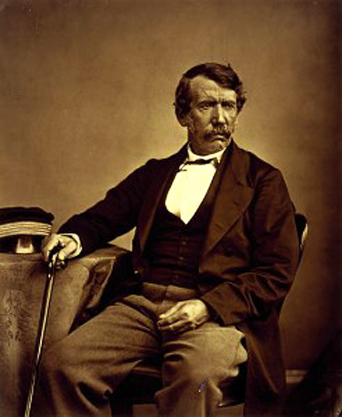
Dr. David Livingstone, the Scottish missionary explorer, awakened the world to the horror of the Arab slave trade, which he called a "monster of iniquity brooding over Africa." By publicizing the evil of slavery, Livingstone worked effectively to see it abolished. 

For every 20,000 slaves captured and exported, he estimated 100,000 Africans were killed, wounded, or died of disease on the slave trails. He wrote: "The many skeletons we have seen along the paths of the wilderness attest the awful sacrifice of human life that must be attributed to this trade in hell."

Today, there are millions who are enslaved by sins. The Lord Jesus has awakened us all to that fact. He wants us to be His witnesses to share the Good News of salvation and liberation from sins through His completed work on the Cross. 

Adapted from 'Dr. Livingstone, I Presume?' Church History
Source:http://www.christianity.com/ChurchHistory/11630560/